

Share this article

How to Use Corporate Photos for Branding That Works

Business meeting on a rooftop terrace, with four people seated at a wooden table overlooking a city skyline.

Corporate photography for marketing is the practice of creating professional images that communicate your company’s values, culture, and identity across every channel where customers encounter your brand. When you use corporate photos for branding, you move beyond generic stock imagery and give your audience something real to connect with. The difference shows up on your website, LinkedIn profile, email campaigns, and printed materials. Done right, professional images build recognition and trust faster than any written description can.

What types of corporate photos work best for branding?

Brand photography covers far more ground than executive headshots. It includes team photos, environmental shots inside your workspace, event coverage, lifestyle images showing company culture, and product photography. Each type serves a specific purpose in your visual identity.

Here is how each style maps to a branding use case:

  • Executive headshots: Build personal credibility on LinkedIn, press releases, and speaker bios. They signal professionalism and approachability at the individual level.
  • Environmental portraits: Show your team at work in real settings. These images perform well on career pages and in company culture content.
  • Lifestyle and candid photos: Capture authentic moments like team meetings, workshops, or community events. Authentic workplace imagery consistently outperforms generic stock photos for employer branding and talent attraction.
  • Event photography: Documents conferences, product launches, and client events. These images work across social media, post-event recaps, and annual reports.
  • Product and service photos: Support sales pages, proposals, and advertising. They show what you actually deliver, not a stock approximation.

The common mistake is focusing only on headshots and missing the broader visual storytelling opportunity. A single shoot can produce assets for your website hero, social media feed, email headers, and printed brochures if you plan it correctly.

Pro Tip: Request a mix of horizontal and vertical compositions during every shoot. Horizontal images work for website banners and email headers, while vertical images are built for LinkedIn posts and printed materials.

Group in a bright office lounge discussing around a coffee table, with colorful mugs and wall art.

How do you plan a corporate photography shoot for branding?

Preparation determines whether a shoot produces usable assets or expensive outtakes. Effective corporate photo programs begin by defining clear objectives: who the audience is, what tone the images should convey, where the images will be used, and what budget is available.

Follow these steps before any shoot:

  1. Define your objectives. Write down the specific channels and formats you need to fill. A LinkedIn banner requires different dimensions than a website hero image.
  2. Build a moodboard. Collect reference images that reflect your brand’s color palette, lighting style, and overall feel. Share this with your photographer before the shoot date.
  3. Create a shot list. List every image you need by type, subject, and setting. This prevents gaps and keeps the shoot on schedule.
  4. Choose locations that reflect your brand. An architecture firm shoots differently than a tech startup. On-location shoots in your actual workspace add authenticity that a studio cannot replicate.
  5. Brief your photographer in writing. Share the moodboard, shot list, brand guidelines, and channel requirements before the session.

Briefing deliverables by output format before the shoot ensures images fit their intended use cases and avoids costly composition fixes in post-production. A social media square crop and a website hero banner require completely different framing decisions made at the moment of capture.

Here is a quick comparison of shoot preparation levels and their typical outcomes:

Preparation level Shot list Moodboard Written brief Typical result
Minimal No No No Inconsistent assets, reshoots needed
Moderate Yes No Verbal only Usable images, some gaps
Thorough Yes Yes Written and shared Campaign-ready assets, minimal waste
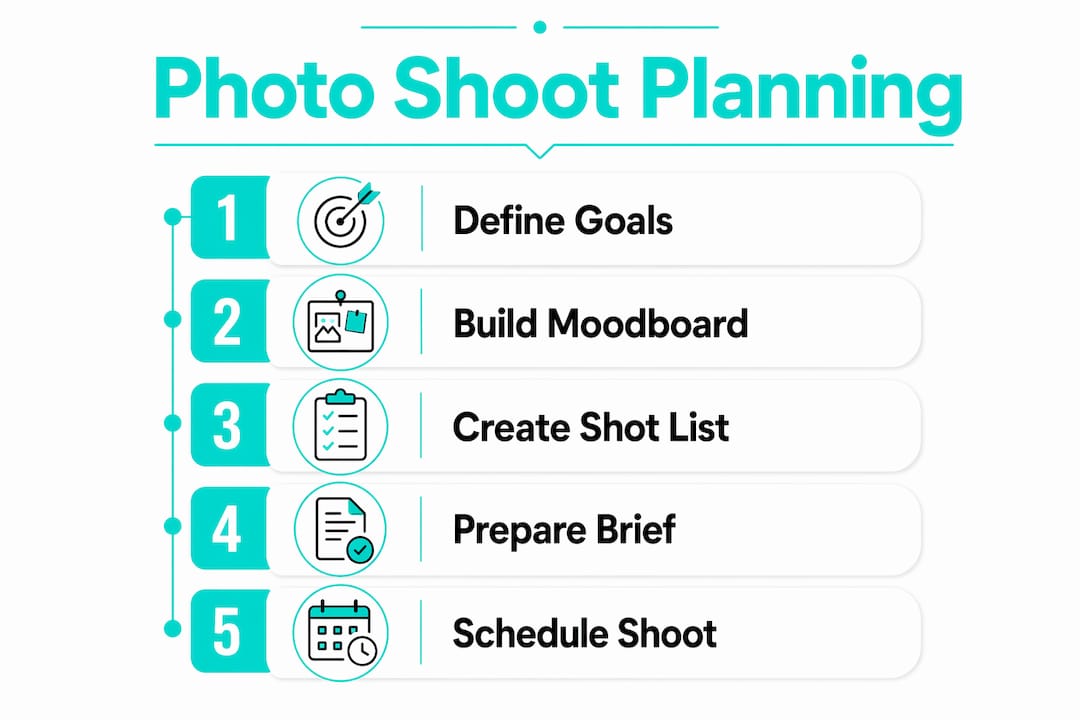
Photo Shoot Planning checklist with five steps: define goals, build moodboard, create shot list, prepare brief, schedule shoot

Pro Tip: Add a photography brief checklist to your project management template so every shoot starts with the same preparation standard.

How to use corporate photos across marketing channels for brand consistency

Deploying images consistently across channels is where most branding with professional images either succeeds or breaks down. The images themselves are only part of the equation. How you organize, adapt, and apply them determines whether your brand looks cohesive or scattered.

Brand consistency depends on a documented visual system shared with every vendor and internal team member. That system should specify lighting style, color grading, cropping standards, and approved image types. Without it, each department makes independent decisions and the brand drifts visually over time.

Practical steps for consistent deployment:

  • Adapt images by format. Crop and resize for each channel rather than using one image everywhere. Website hero images, Instagram posts, and email headers each have different aspect ratios and focal point requirements.
  • Name and organize your photo library. Treat your photo assets like a product catalog with consistent naming conventions. A structure like YYYY-MM_ShootType_Subject_Usage makes files findable by anyone on your team.
  • Write descriptive alt text for every image. Alt text for informative images should be 125 characters or fewer and describe what the image shows. This supports both accessibility and SEO.
  • Use empty alt text for purely decorative images. Screen readers skip images with empty alt attributes, which reduces noise for users relying on assistive technology.

Channel Recommended image type Key format consideration
Website hero Environmental or lifestyle Wide horizontal, high resolution
LinkedIn Headshots, team, event Square or vertical for posts
Email marketing Lifestyle, product Compressed for fast loading
Print brochures Environmental, team 300 DPI minimum
Proposals Headshots, product Clean backgrounds, consistent style

Pro Tip: Create a shared folder with pre-approved, pre-sized images for each channel. This cuts campaign launch time and prevents team members from pulling outdated or off-brand images.

What are the most common mistakes when using corporate photos for branding?

Even well-funded marketing teams make avoidable errors with their corporate imagery. Knowing these pitfalls in advance saves time, money, and brand credibility.

  1. Over-relying on stock photos. Generic stock imagery signals inauthenticity. Audiences recognize stock photos immediately, and the association weakens trust in your brand.
  2. Skipping the written brief. A verbal conversation with a photographer is not a brief. Without written direction, shoots produce images that miss the mark for tone, composition, or usage requirements.
  3. Inconsistent editing styles. Mixing warm-toned lifestyle photos with cool corporate headshots creates visual noise. Consistency fails subtly when teams distribute images across departments without a shared imagery guide.
  4. Ignoring licensing terms. Photos sourced from platforms like Getty Images carry specific commercial versus editorial restrictions and geographic limitations. Using an editorial image in a paid advertisement violates licensing terms and creates legal exposure.
  5. Neglecting alt text and file naming. Skipping these steps costs you SEO value and excludes users who rely on screen readers.

“Brand consistency hinges more on repeatable visual systems and documented style guides than on having isolated great photos.” This means one excellent shoot is not enough. You need a system that produces consistent results every time, regardless of who is managing the campaign.

A headshot photography brief is a good starting point for documenting standards at the individual image level. Scale that discipline up to every shoot type and you have the foundation of a reliable visual identity.

Key takeaways

Professional corporate photography builds brand recognition and trust when you plan shoots thoroughly, deploy images consistently, and maintain a documented visual system across all channels.

Point Details
Plan before you shoot Define objectives, build a moodboard, and share a written brief with your photographer.
Match image types to channels Use headshots for LinkedIn, environmental shots for career pages, and lifestyle images for social media.
Organize your photo library Name files consistently and create pre-sized folders for each marketing channel.
Document your visual standards Share a brand imagery guide with every vendor and internal team to prevent visual drift.
Prioritize alt text and licensing Write descriptive alt text for every informative image and verify licensing before any commercial use.

What I’ve learned from years of corporate shoots

After more than a decade behind the lens for corporate clients in Phoenix, AZ, the single biggest differentiator I see between brands that look polished and brands that look patched together is not budget. It is documentation.

The clients who arrive with a written brief, a moodboard, and a clear shot list walk away with a full library of usable assets. The clients who show up with a vague idea of what they need spend twice as much time in post-production and still end up with gaps. The brief is not a formality. It is the product specification for your visual identity.

The second thing I have noticed is that authentic imagery wins every time. I have shot the same type of team photo in a sterile conference room and in an actual working environment. The conference room version looks like every other company. The working environment version tells a story. Audiences feel the difference even when they cannot articulate why.

My recommendation: treat your first corporate shoot as a visual identity audit. Identify every channel where your brand appears, list the image types each channel needs, and build your shot list from that inventory. You will leave the shoot with assets that last two to three years instead of six months.

— Justin

Professional corporate photography services in Phoenix, AZ

JFPhotos brings over a decade of experience to corporate photography sessions across Phoenix, AZ, producing images built for real marketing use. Every shoot is planned around your specific channels, brand tone, and audience so you receive a library of assets ready for your website, LinkedIn, email campaigns, and print materials.

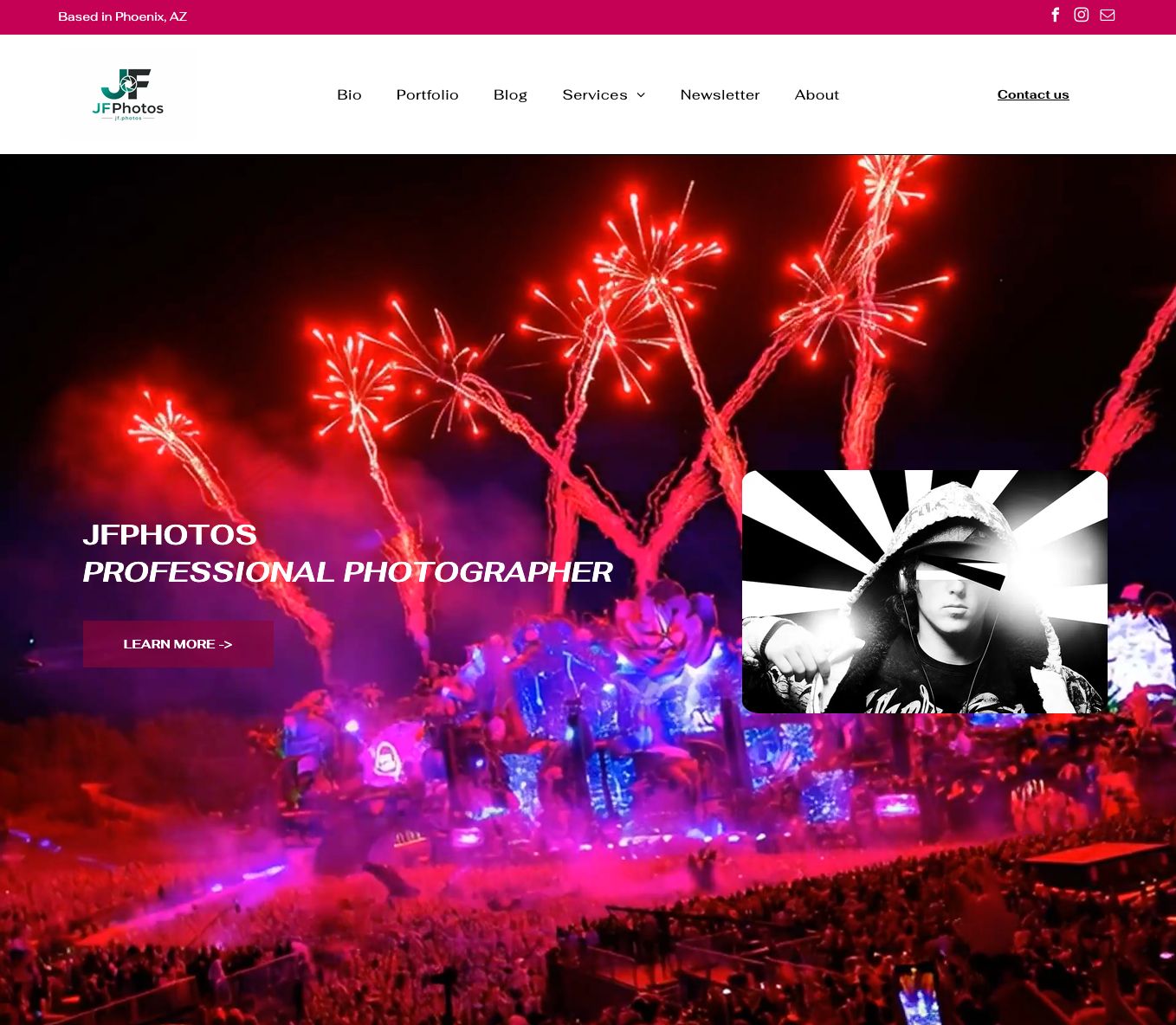
Homepage hero for JEPHOTOS professional photography, with red fireworks over a concert crowd and a camera portrait inset

Whether you need executive headshots, environmental team photos, or full corporate event coverage, JFPhotos tailors each session to your branding goals. You can review the full range of photography services or reach out directly for a custom proposal. The result is a photo library your marketing team can use with confidence across every channel.

FAQ

What does it mean to use corporate photos for branding?

Using corporate photos for branding means creating and deploying professional images that reflect your company’s values, culture, and identity across marketing channels. These images replace generic stock photos with authentic visuals that build recognition and trust.

What types of photos should a company prioritize for branding?

Environmental portraits, team lifestyle images, and event photos deliver the most branding value beyond standard headshots. Each type serves a specific channel and communicates a different aspect of your company culture.

How do I maintain visual consistency across marketing channels?

Build a documented brand imagery guide that specifies lighting style, color grading, and approved image types, then share it with every vendor and internal team member. Organize your photo library with consistent naming conventions so the right images are always accessible.

Do I need to worry about licensing for corporate photos?

Yes. Platforms like Getty Images specify whether images can be used commercially or only editorially, and some licenses include geographic restrictions. Always verify licensing terms before using any third-party image in paid advertising or marketing materials.

How important is alt text for corporate photos used online?

Alt text is critical for both accessibility and SEO. Write descriptive alt text of 125 characters or fewer for every informative image, and use empty alt text for purely decorative images so screen readers can skip them cleanly.

Recommended

Recent Posts

By Justin Frazier July 30, 2026
Master event photography lighting considerations with this essential guide. Learn tips to capture stunning images at any venue.
By Justin Frazier July 29, 2026
Discover effective wedding portrait lighting techniques to enhance your photos. Master backlight, off-camera flash, and continuous LEDs.
Family gathering outdoors with a woman kneeling to adjust a child’s hair as a man watches nearby.
By Justin Frazier July 26, 2026
Discover why families choose annual portrait sessions to capture growth, create memories, and build traditions. Relive your family's unique story.
Photographer taking a portrait of a woman by a colorful mural with a full-length mirror outdoors
By Justin Frazier July 25, 2026
Learn how to dress for professional headshots with expert tips on colors, styles, and necklines that enhance your image. Stand out!
Family reading a colorful brochure together outdoors in a sunny garden.
By Justin Frazier July 24, 2026
Discover what a family photography style guide is and how it ensures your family looks confident and comfortable in every photo session.
Text reading “Best hrphotoandfilm.com Alternatives for 2026” on a white background with pink abstract swirls.
By Justin Frazier July 23, 2026
Discover the best hrphotoandfilm.com alternatives for 2026. Explore top providers for local photography, technical services, and more!
Two people reviewing a photo album together at a kitchen table, smiling and pointing at pages
By Justin Frazier July 22, 2026
Discover why hiring a wedding photographer early is crucial. Secure your preferred date, find the right style, and enjoy peace of mind on your big day.
Photographer kneels at a garden wedding ceremony as the bride and groom stand before seated guests.
By Justin Frazier July 21, 2026
Discover the essential role of second photographer weddings. Capture every moment and emotion for a complete, stunning wedding album!
Man adjusting a camera tripod on a sunny palm-lined walkway with colorful flowers and pedestrians
By Justin Frazier July 20, 2026
Discover how to hire an event photographer for conference success in 2026. Explore top providers who deliver high-quality visual storytelling.
By Justin Frazier July 20, 2026
Learn how to plan an executive portrait session in 2026 for impactful images that enhance your brand and influence perception.
Show More