
Wedding Photography Packages Explained: 2026 Guide
A wedding photography package is a pre-designed bundle of services and deliverables that a photographer offers at a fixed price to document your wedding day. Most packages define coverage hours, the number of edited images you receive, delivery format, and any physical products included. Understanding what a wedding photography package contains before you sign a contract protects your budget and sets realistic expectations for your wedding day.
The national median cost for a wedding photography package in the U.S. ranges from $2,500 to $3,800, with photography representing 11–14% of total wedding budgets. That share makes it one of the largest single vendor expenses most couples face. Getting clear on what you are buying before you commit is not optional. It is the difference between a package that fits your day and one that leaves critical moments uncovered.
What is a wedding photography package?
A wedding photography package is the industry’s standard way of pricing and structuring services for couples. Rather than billing by the hour for every task separately, photographers bundle coverage time, editing, and delivery into a single price. This approach gives you a predictable cost and a clear scope of work before the wedding day arrives.
The term “package” is used loosely across the industry. One photographer’s 8-hour package may deliver 300 photos with no extras, while another’s delivers 700 photos plus add-ons. That gap is not a pricing error. It reflects how differently photographers structure their offerings. Focusing on specific deliverables rather than the package name or price alone is the only reliable way to compare your options.
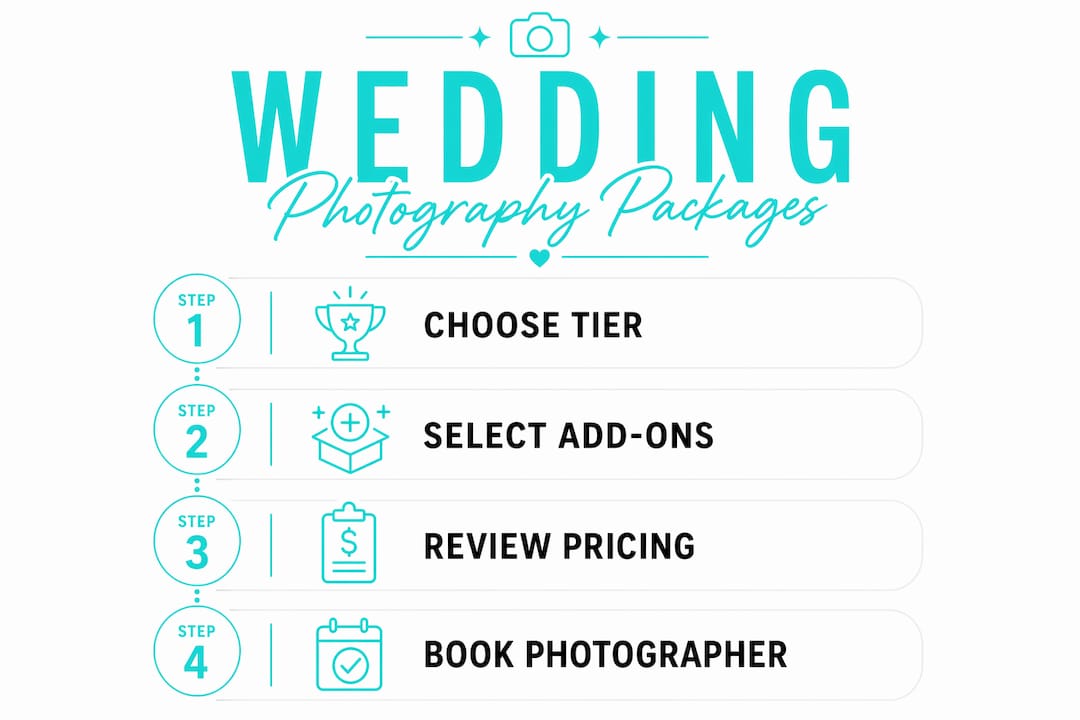
Most packages fall into three tiers: Essential, Signature, and Elite. A three-tier model reduces choice paralysis and helps you match your priorities to a service level. It also makes it easier to spot what you are giving up when you choose a lower tier or what you gain by upgrading.
What does a standard package include?
Standard wedding photography packages share a consistent set of core components, even when the details vary by photographer. Knowing the baseline helps you identify when a package is missing something you need.
Here is what most packages include at the base level:
- Coverage hours: Most packages offer 6–10 hours of on-site coverage, spanning getting-ready shots through the reception.
- Edited high-resolution images: The average package delivers 400–800 fully edited photos for 6–8 hours of coverage. High-volume photographers may deliver 800–1,200.
- Private online gallery: Edited images are delivered through a password-protected gallery, typically hosted on platforms like Pixieset or ShootProof.
- Print release: Most packages include a personal print release, which lets you print photos for personal use. This is not the same as owning the copyright.
- Pre-wedding consultation: Many photographers include a planning session to review your timeline, key moments, and shot priorities.
- Standard post-production editing: Color correction, exposure adjustments, and basic retouching are standard. Extensive skin retouching or artistic composites are usually add-ons.
Turnaround times for edited galleries typically run 6–8 weeks after the wedding. Some photographers deliver sooner, but that speed often comes at an extra cost.
Pro Tip: Ask every photographer you interview for a sample gallery from a full wedding day, not just their portfolio highlights. A sample gallery shows you the actual volume and consistency of their editing across an entire event.
What add-ons can you upgrade your package with?
Optional upgrades let you customize a base package to match your specific wedding day needs. Most photographers offer a defined menu of add-ons with fixed pricing, so you can plan your total budget before booking.
Common add-ons include:
- Second shooter: A second photographer adds 30–40% more coverage by capturing different angles simultaneously. This add-on is typically priced between $800 and $1,500.
- Engagement session: A pre-wedding portrait session helps you get comfortable in front of the camera and gives you photos for save-the-dates or wedding websites.
- Rehearsal dinner coverage: Some couples add a few hours of coverage for the night before the wedding.
- Printed wedding album: A professionally designed album is the most popular physical product add-on. Prices vary widely, but quality lay-flat albums typically start around $500 and can exceed $2,000.
- Rush delivery: Standard turnaround is 6–8 weeks. Rush delivery, which cuts that to 2–3 weeks, often costs an additional $200–$600.
- Extended coverage: If your reception runs long, overtime rates apply. These generally range from $200 to $600 per extra hour.
- Travel fees: Local travel is often included within a set radius. Destination weddings or venues beyond that radius add fees that can reach $3,000 or more internationally.
Pro Tip: Budget for at least one add-on before you finalize your package choice. Most couples add a second shooter or extended coverage after booking, and pre-negotiating those rates in your contract saves money compared to day-of requests.
How does regional pricing affect wedding photography costs?
Regional pricing is the most overlooked variable when couples compare packages. Similar quality and coverage can differ by thousands of dollars depending on whether you are in a major metro market or a smaller city. Understanding this spread helps you benchmark quotes accurately.
The table below shows approximate price ranges for a comparable 8-hour package across different U.S. markets in 2026:
| Market Type | Estimated 8-Hour Package Range |
|---|---|
| Major metro (NYC, LA, Chicago) | $4,000–$7,500+ |
| Mid-size city (Phoenix, Denver, Austin) | $2,500–$4,500 |
| Smaller market or rural area | $1,500–$3,000 |
| Destination wedding (international) | $5,000–$10,000+ |
Base packages for 6 hours of coverage start around $2,000 in many markets and climb to $4,500 or more depending on the area and photographer experience. Add-ons like albums, second shooters, and rush delivery push the final price higher regardless of region.
Price alone does not indicate quality. A photographer charging $1,800 in a smaller market may produce work that rivals a $5,000 photographer in a major city. The deliverables and portfolio tell you far more than the price tag. Request at least three local quotes to establish a realistic benchmark for your specific market, then evaluate each package on its actual contents.
You can also explore different wedding photography styles before comparing packages, since your preferred style (documentary, fine art, editorial) often influences which photographers and price tiers align with your vision.
How to compare and choose the right package
Choosing the right wedding photo bundle requires a structured approach. Price and hours are starting points, not the full picture. Here is a practical process for evaluating your options:
- List your non-negotiable moments. Getting ready, the ceremony, first dance, and family portraits are standard. If you also want full cocktail hour coverage or a late-night send-off, confirm those moments fit within the package hours.
- Compare deliverables side by side. Create a simple spreadsheet listing coverage hours, edited image count, turnaround time, and included add-ons for each package you are considering.
- Use a tiered model to simplify decisions. If a photographer offers Essential, Signature, and Elite tiers, start with the middle tier and identify what you would gain or lose by moving up or down.
- Clarify copyright and print rights. Photographers retain copyright in most contracts. You receive a print release for personal use. Confirm what that release covers before signing.
- Ask about overtime rates upfront. Wedding day flow is rarely linear. Negotiate overtime rates before the wedding, not during it. Pre-agreed overtime rates prevent surprise invoices after the event.
- Ask for a full sample gallery. A portfolio shows best-case work. A full gallery shows consistent quality across an entire wedding day.
- Confirm what editing is included. Standard color correction is universal. Advanced retouching, black-and-white conversions, or artistic edits may cost extra.
Reviewing local photographer options in your area gives you a concrete baseline for what packages in your market typically include and how they are priced.
Key takeaways
A wedding photography package is a fixed-price bundle of coverage hours, edited images, and deliverables that defines exactly what you receive from your photographer on your wedding day.
| Point | Details |
|---|---|
| Core inclusions matter most | Evaluate coverage hours, edited image count, and delivery format before comparing prices. |
| Add-ons affect total cost | Second shooters, albums, and rush delivery can add $800–$3,000+ to a base package price. |
| Regional pricing varies widely | Similar packages can differ by thousands depending on your market; get at least three local quotes. |
| Copyright stays with the photographer | You receive a print release for personal use; confirm its scope in your contract before signing. |
| Overtime rates need pre-negotiation | Agree on extended coverage rates before the wedding day to avoid unexpected charges. |
What i’ve learned after photographing hundreds of weddings
After more than a decade behind the camera at weddings across Arizona, the single biggest source of couple frustration is not the photos. It is the contract. Specifically, it is what couples assumed was included versus what was actually written down.
I have seen couples expect a printed album because “it felt like it was part of the deal,” only to find it was a paid add-on. I have seen others surprised by overtime charges because the reception ran 90 minutes long and they had not asked about that rate upfront. These are not photographer tricks. They are the result of couples not reading the package details carefully before signing.
My honest advice: treat the package document like a checklist, not a brochure. Go line by line. If something is not written down, it is not included. Ask every question that comes to mind before you book, not after. A photographer who gets frustrated by detailed questions before the wedding is not the right photographer for your wedding day.
The other thing I tell every couple: do not let price be the first filter. Look at full galleries first. Find the style that moves you. Then check if the package fits your budget. Reversing that order leads to regret far more often than it leads to savings.
— Justin
Plan your wedding photography with JfPhotos
JFPhotos brings over a decade of professional wedding photography experience to couples across Phoenix, AZ and beyond. Whether you are looking for a focused package covering your ceremony and portraits or full-day coverage with a second shooter, JFPhotos offers tiered options designed to match your wedding day priorities and budget.
Every package from JFPhotos includes professional editing, private gallery delivery, and a personal consultation to plan your timeline. You can explore the full range of wedding photography services available for Phoenix area couples, or browse the complete services catalog to see how JFPhotos tailors each package to your vision. Reach out today to discuss your date and get a personalized quote.
FAQ
What is included in a standard wedding photography package?
A standard package includes 6–10 hours of coverage, 400–800 professionally edited photos, a private online gallery, and a personal print release. Many packages also include a pre-wedding planning consultation.
How much does an average wedding photography package cost?
The national median cost ranges from $2,500 to $3,800 in the U.S., though prices vary significantly by region. Major metro markets often start at $4,000 or more for comparable coverage.
Do i own the photos in my wedding photography package?
Photographers typically retain copyright over the images. You receive a print release that allows personal use, such as printing and sharing, but not commercial use or contest submissions without the photographer’s permission.
What is a second shooter and do i need one?
A second shooter is an additional photographer who captures different angles and moments simultaneously. This add-on typically costs $800–$1,500 and increases coverage by 30–40%, making it especially valuable for larger weddings or venues with multiple locations.
How do i compare wedding photography packages effectively?
Focus on specific deliverables rather than price or package name alone. Compare coverage hours, edited image count, turnaround time, and included add-ons side by side, and always ask about overtime rates and copyright terms before signing.