What Is a Corporate Event Photography Brief?
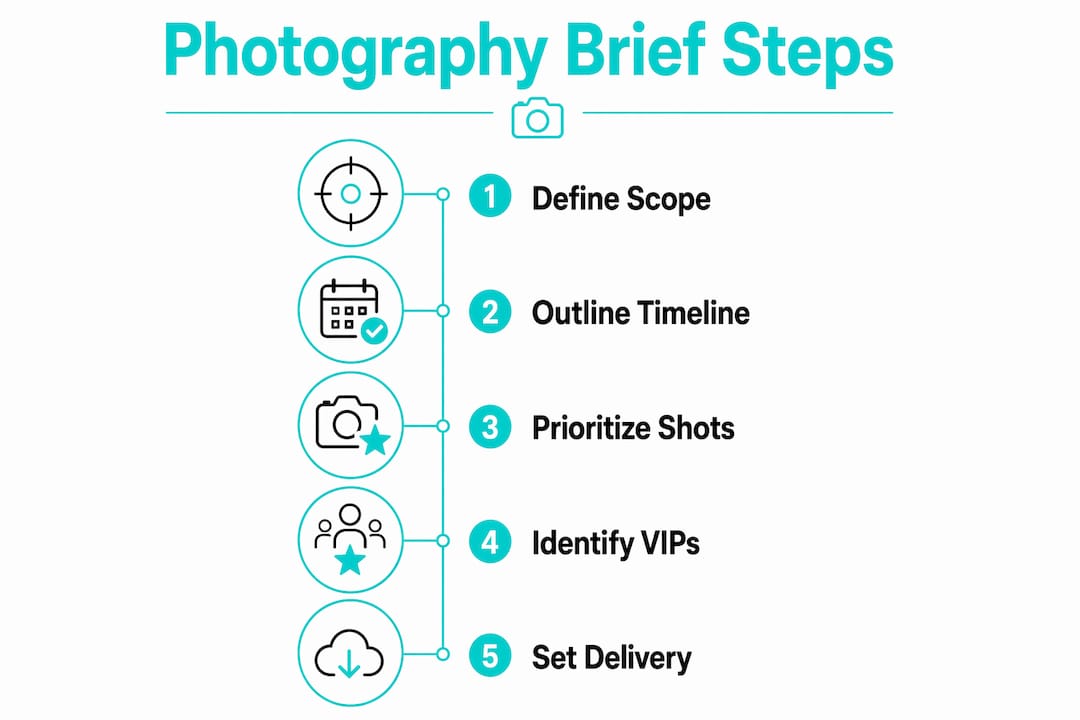
A corporate event photography brief is a formal document that defines exactly what photos must be captured, when they must be taken, and how the final images should be delivered. Known in the industry as a photography creative brief , this document functions as a binding agreement between the event planner and the photographer. It covers the event’s purpose, a chronological shot list, branding guidelines, and delivery expectations. Without one, photographers operate on guesswork, and planners risk missing the images that matter most for marketing, internal communications, and executive reporting.
What is a corporate event photography brief and why does it matter?
A complete photography brief is a singular formal document defining scope, schedule, must-capture moments, and delivery expectations. It takes roughly 30 minutes to write and significantly reduces the risk of missing key deliverables. That time investment is small compared to the cost of re-staging a keynote moment or explaining to leadership why the CEO’s award presentation was never photographed.
The brief matters because it replaces assumptions with clarity. Most event organizers who skip a detailed brief experience uneven coverage, missed VIP shots, and delivery delays. A single well-formed document prevents the majority of photographic failures and miscommunications before the event even starts.
Linking photography to business outcomes is also part of the brief’s job. Using the SMART goals framework to define visual objectives connects photography efforts directly to measurable results like social media reach, press releases, and internal newsletters. This transforms the brief from an administrative task into a strategic planning tool.
What key components must be included in a photography brief?
A photography brief for events covers seven core areas. Each one removes a specific category of ambiguity that would otherwise slow down the photographer or produce unusable images.
- Event overview and purpose. State the event name, date, location, and the business goal behind it. Is this an annual conference, a product launch, or a leadership summit? The photographer needs to understand the “why” to make informed decisions on the ground.
- Chronological timeline. List every segment of the event in order, with start times and locations. Registration, keynote, breakout sessions, networking lunch, and awards ceremonies each require different photographic approaches.
- Point of contact. Name one person the photographer can reach during the event for real-time decisions. Include a cell phone number, not just an email address.
- Prioritized shot list. Identify must-have images, high-value images, and nice-to-have images. This is covered in detail in the next section, but the brief must include this structure explicitly.
- Branding and usage guidelines. Specify whether images will appear on LinkedIn, in press releases, on the company website, or in internal reports. This affects framing, color treatment, and editing style. Include logo placement requirements if branded backdrops are involved.
- Delivery requirements. State the file formats needed (JPEG, RAW, or both), the resolution requirements, and the deadline. Standard delivery turnaround ranges from 24 to 48 hours for urgent requests up to 3 to 5 business days for standard projects.
- Budget and logistics. Confirm the number of photographers, hours of coverage, parking or venue access details, and any permit requirements.
Pro Tip: A concise brief that answers who, where, why, and how images will be used outperforms a lengthy theoretical document every time. Keep yours to two pages maximum.
How to create a prioritized, chronological shot list
A shot list is not a wish list. Including times, locations, and priorities transforms a wish list into an executable plan that gives photographers confidence and ensures complete event capture.
The most effective structure uses three priority tiers:
- P1 (must-have shots). These are non-negotiable. If the event runs short or the schedule compresses, P1 shots get captured first. Examples include the CEO’s opening remarks, the award presentation, the product reveal, and any branded stage moments. Successful shot lists identify 5 to 8 non-negotiable moments across the full event.
- P2 (high-value shots). These are important but not critical if time runs out. Examples include candid networking moments, breakout session discussions, and group photos with department heads.
- P3 (nice-to-have shots). These add texture and variety to the final gallery. Examples include venue detail shots, food and beverage setups, and wide establishing shots of the room before guests arrive.
Organize the list chronologically by event segment. A well-structured shot list for a half-day conference might look like this:
| Event segment | P1 shots | P2 shots |
|---|---|---|
| Registration (8:00 AM) | Attendee badge pickup, branded signage | Candid arrivals, sponsor table |
| Keynote (9:00 AM) | Speaker on stage, audience reaction | Wide room shot, Q&A interaction |
| Networking lunch (12:00 PM) | Executive group photo | Candid conversations, catering setup |
| Awards ceremony (2:00 PM) | Award handoff, winner portrait | Applause moment, full stage group |
The P1 to P3 priority system prevents wasted time and ensures event validation images are captured even when schedules compress unexpectedly. This is the single most practical upgrade most corporate event photo checklists are missing.
Pro Tip: Flag VIP names and faces in the brief itself. Attach headshots if possible so the photographer can identify key individuals before the event starts, not during it.
Common pitfalls in writing photography briefs
Most briefs fail in predictable ways. Recognizing these mistakes before you write the document saves you from discovering them on event day.
- Vague or missing shot priorities. Listing 40 shots with no indication of which ones matter most forces the photographer to make judgment calls that should be yours. Every shot list needs P1, P2, and P3 designations.
- No chronological context. A flat list of shots with no timing or location information is nearly useless during a fast-moving event. The photographer cannot be in two places at once, and without a timeline, they cannot plan their movement.
- Missing brand and usage guidelines. Photographers who do not know where images will appear cannot make informed decisions about framing, editing tone, or whether to include audience members who may not have signed media releases.
- Unclear delivery expectations. Stating “send photos when ready” creates friction and delays. Specify the format, the resolution, the delivery platform (Dropbox, Google Drive, WeTransfer), and the exact deadline.
- Treating the brief as a final document. Photography briefs function as live contracts that remain open for updates until the event starts. Last-minute schedule changes, added VIPs, or security restrictions must be reflected in the brief before the photographer arrives.
- Overly long briefs. A concise, actionable brief produces faster turnaround and clearer results than a 10-page document the photographer skims once and sets aside.
The pattern across all these pitfalls is the same: the brief was written as a formality rather than a working tool. Treat it as the photographer’s field guide, and write it accordingly.
Practical tips to ensure a smooth photography process on event day
A well-written brief only works if the operational details support it. These steps translate your document into reliable on-the-ground execution.
- Confirm arrival time in writing. The photographer should arrive 60 to 90 minutes before the event to test lighting, check camera settings, and complete venue reconnaissance. This advance arrival directly reduces the chances of missing critical shots during the opening minutes.
- Provide a floor plan. Include a venue layout in the brief or send it separately before the event. Mark the stage location, registration area, breakout rooms, and any restricted zones.
- Assign a staff contact on-site. The point of contact named in the brief should be reachable by phone throughout the event, not managing the registration desk. Real-time communication allows the photographer to adapt when the schedule shifts.
- Share the brief with venue staff. Security teams and venue managers who know a photographer is credentialed and working from an approved plan create fewer access problems during the event.
- Plan the post-event review process. Clear communication guidelines and a post-event approval process reduce misalignments and improve final image satisfaction. Define who reviews the gallery, who approves final selects, and what the revision process looks like.
Pro Tip: Walk the venue with the photographer before guests arrive. Thirty minutes of shared reconnaissance eliminates more problems than two hours of back-and-forth emails after the event.
You can find additional photography planning resources on the JFPhotos blog, including tips specific to Arizona venues and corporate event formats.
Key takeaways
A corporate event photography brief is the single document that determines whether your event photos serve your business goals or simply fill a hard drive.
| Point | Details |
|---|---|
| Define the brief clearly | A photography brief covers event purpose, timeline, shot priorities, branding rules, and delivery expectations in one document. |
| Use the P1/P2/P3 system | Categorize every shot by priority so photographers capture non-negotiable moments first when schedules compress. |
| Keep it concise | A two-page brief outperforms a lengthy document. Answer who, where, why, and how images will be used. |
| Treat it as a live document | Update the brief until the event starts to capture schedule changes, added VIPs, and new access requirements. |
| Plan for day-of execution | Confirm 60 to 90 minute early arrival, provide floor plans, and assign a real-time on-site contact. |
Why the brief is the most underrated tool in event planning
After working corporate events across Phoenix for over a decade, I can tell you the brief is where most event photography either succeeds or quietly falls apart. Planners who hand a photographer a two-sentence email and a venue address are not being efficient. They are transferring the planning burden to someone who was not in the strategy meetings and does not know which moments carry the most weight.
The briefs I have seen work best are not the longest ones. They are the most specific ones. A planner who writes “capture the CEO shaking hands with the award winner at 2:15 PM on the main stage, P1 priority” gives the photographer something to execute. A planner who writes “get some award photos” gives the photographer a problem to solve in real time.
Briefing a photographer strategically is about alignment, not micromanagement. When photographers understand the event’s purpose and the business goals behind the images, they make better creative decisions within the boundaries you set. That is what separates a gallery of technically correct photos from a gallery that actually tells the story of your event.
My recommendation: write the first draft of your brief four weeks out, share it with the photographer two weeks out, and update it the day before. That three-step process catches most of the problems before they become missed shots.
— Justin
Professional event photography for corporate clients in Phoenix
Planning a corporate event in Phoenix and need a photographer who works from a clear, professional brief? JFPhotos brings over a decade of experience to corporate event photography across the Phoenix metro area, from executive conferences to product launches and awards ceremonies.
At JFPhotos, we work with planners before the event to align on shot priorities, timelines, and delivery expectations. You get a photographer who arrives prepared, executes your brief with precision, and delivers edited images on a timeline that fits your communications schedule. Explore our full range of photography services or reach out to start planning your event coverage today.
FAQ
What is a photography brief for a corporate event?
A corporate event photography brief is a formal document outlining the event’s scope, shot list priorities, timeline, branding guidelines, and delivery requirements. It serves as the working agreement between the event planner and the photographer.
How long does it take to write a photography brief?
A complete photography brief takes roughly 30 minutes to write and should be no longer than two pages. Concise briefs produce faster turnaround and clearer results than lengthy documents.
What should a corporate event photo checklist include?
A corporate event photo checklist should include the event timeline, prioritized shot categories (P1, P2, P3), VIP identification, branding and usage rules, delivery format, and the on-site point of contact’s phone number.
When should the photographer arrive at a corporate event?
The photographer should arrive 60 to 90 minutes before the event starts. This allows time for venue reconnaissance, lighting tests, and camera setup before guests arrive.
How do I prioritize shots in an event photography brief?
Use a three-tier system: P1 for must-have shots, P2 for high-value shots, and P3 for nice-to-have shots. Successful briefs identify 5 to 8 non-negotiable P1 moments and organize all shots chronologically by event segment.