How to Prepare for a Corporate Headshot Session
A corporate headshot session is a professional portrait shoot designed to represent your personal brand across LinkedIn profiles, company websites, and business materials. Preparation is the single biggest factor in the quality of your final images. A standard session lasts about 30 minutes, which means there is no time to recover from a wrinkled shirt or tired eyes once the camera starts. The professionals who walk away with standout images are the ones who treat the week before the shoot as part of the session itself.
How to prepare for a corporate headshot session: the full checklist
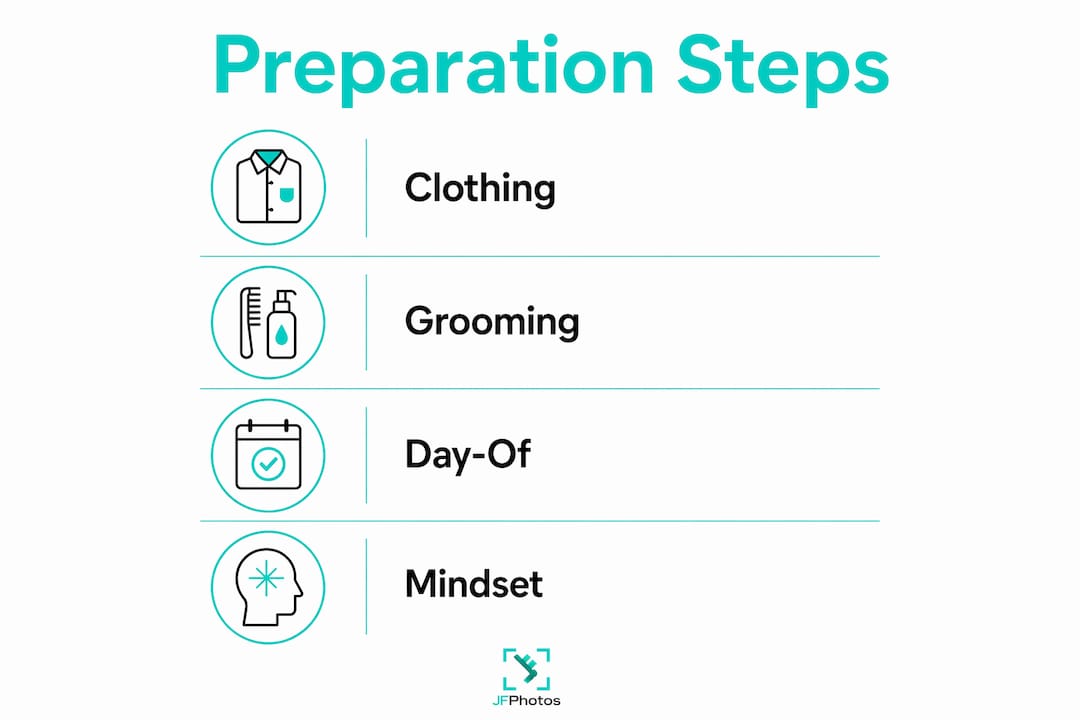
Effective corporate photo prep covers four areas: clothing, grooming, day-of logistics, and mindset. Each area has a specific timeline. Skipping any one of them shows up in the final image in ways that retouching cannot fully fix. Understanding what defines a professional headshot helps you set the right expectations before you even pick an outfit.
What should professionals wear to their corporate headshot session?
Clothing is the first thing viewers notice after your face. The goal is to support your presence, not compete with it.
Solid, mid-saturation colors photograph best. Navy, charcoal, burgundy, and cream all work well because they create clear contrast without overwhelming the frame. That contrast keeps the viewer’s eye on your face, which is exactly where it belongs.
Bright white and pure black cause separation issues when the background tone is similar. A bright white shirt against a light gray backdrop can blow out the edges of your frame. A black blazer against a dark background makes you look like a floating head.
Busy patterns and tight stripes create moiré effects on camera. Moiré is a visual interference pattern that makes fabric look like it is vibrating. It pulls attention away from your face and is difficult to remove in post-production.
Here is a quick reference for best outfits for headshots:
- Wear: Navy, charcoal, forest green, burgundy, slate blue, cream, soft gray
- Avoid: Bright white, pure black, neon colors, large logos, graphic prints
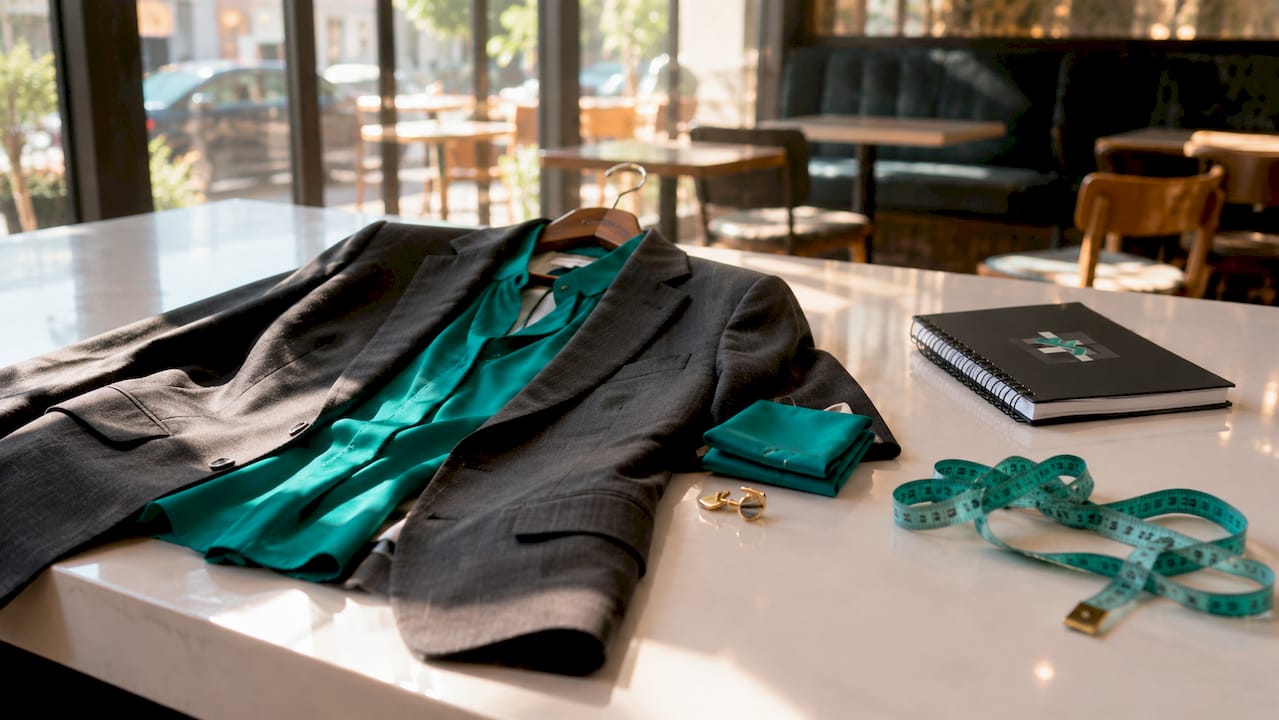
- Fabric: Choose structured materials like wool blends, ponte knit, or cotton twill that hold their shape under studio lighting
- Fit: Clothes that fit well at the shoulder and chest read as polished on camera, even if the rest of the frame is cropped
- Variety: Bring two or three outfit options to give yourself flexibility in the final gallery
Pro Tip: Lay your outfit flat the night before and photograph it with your phone. Zoom out until the image is thumbnail size. If the fabric pattern looks busy or distracting at that scale, swap it out before the session.
Clothing should support the professional, not compete visually. Well-fitted garments that hold their shape create the strongest impression. Think of your outfit as a frame for your face, not a statement piece.
How should professionals schedule grooming and skincare before the session?
Grooming has a timeline. Getting it right requires planning at least two weeks out, not the night before.
-
Two weeks before: Book your haircut. Schedule haircuts 1 to 2 weeks before the session so the style has time to settle. A fresh cut the day before often looks too sharp or unnatural in photos.
-
One week before: Lock in your skincare routine. Stick to products you already know work for your skin. This is not the time to test anything new.
-
48 to 72 hours before: Stop all new skincare actives. Avoid new skincare products within 48 to 72 hours to prevent redness or irritation. Retinoids, vitamin C serums, and chemical exfoliants can cause visible reactions that are hard to retouch.
-
Two nights before: Prioritize sleep. Sleeping eight hours two nights before the session is one of the most effective things you can do. Tired eyes and dehydrated skin show up clearly in photos and cannot be fully corrected in editing.
-
Day before: Optional grooming appointments. Eyebrow shaping, a manicure, or a beard trim are all reasonable additions. Keep them minor and familiar.
Pro Tip: Drink at least 64 ounces of water in the 24 hours before your session. Hydration affects skin texture and eye brightness in ways that no filter or retouch can replicate.
The eyes are the focal point in headshots. Good sleep and hydration improve skin tone and eye clarity more than any post-processing technique. Build both into your prep schedule as non-negotiable steps.
What are the essential day-of-session preparations?
The morning of your session sets the tone for everything that follows. Small details handled in advance prevent big problems on camera.
Physical preparation:
- Eat a light, protein-rich breakfast. Eggs, Greek yogurt, or oatmeal give you steady energy without bloating.
- Avoid heavy, salty, or processed foods. They cause puffiness, especially around the eyes and face.
- Drink water consistently through the morning.
- Skip hats and sunglasses on the way to the session. Both leave marks and indentations on skin and hair that take time to fade.
What to bring:
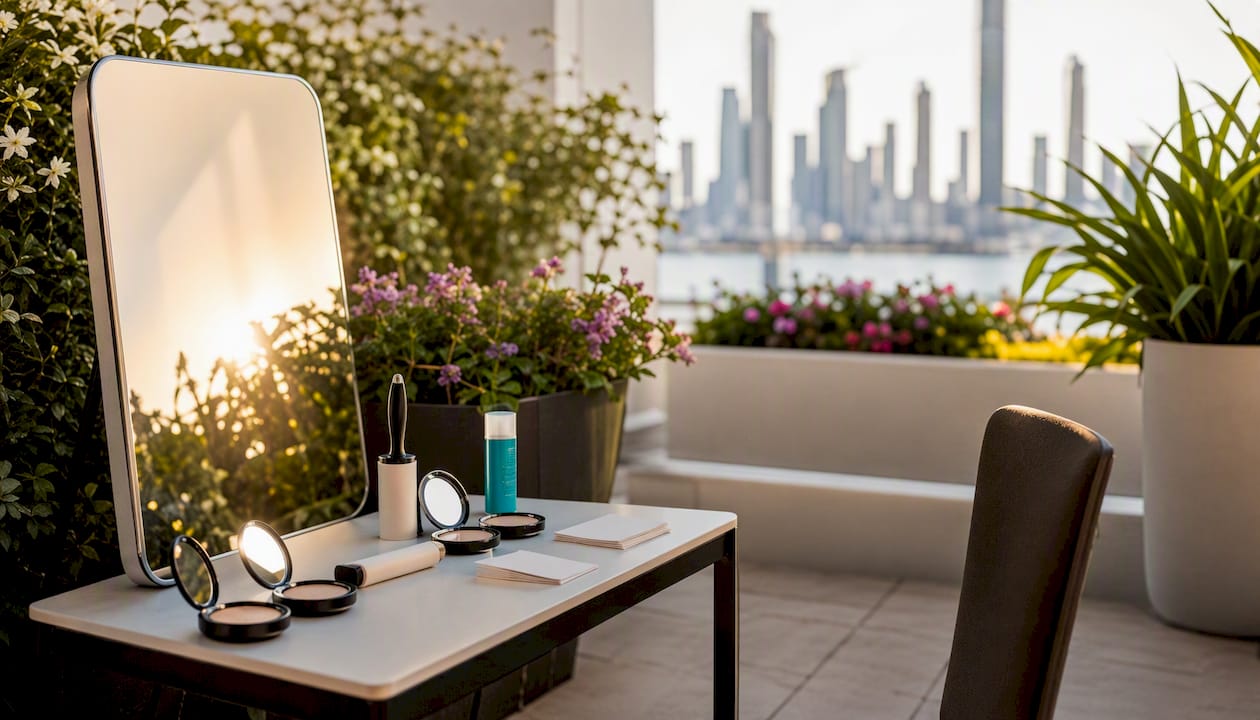
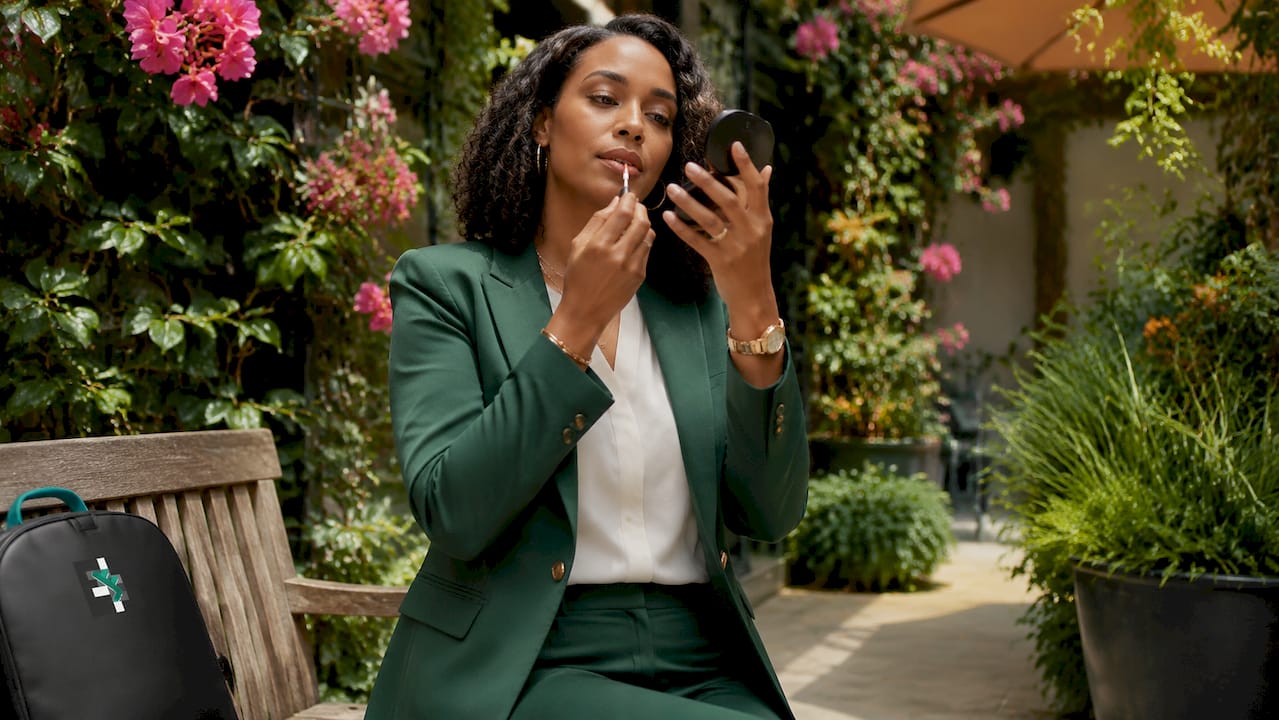
Bring a lint roller, a small mirror, and backup clothes to handle last-minute issues. Blotting papers or translucent powder help manage shine under studio lights. A small comb or brush keeps hair in place between shots.
- Arrive 10–15 minutes early. This gives you time to settle, check your appearance, and calm any nerves before the shoot starts.
- Use the mirror to check your collar, lapels, and hair before each wardrobe change.
- Keep your phone in your bag during the session. Distractions break your focus and affect your expression.
Mindset and expression:
Expressions are more natural when you hold a genuine thought rather than forcing a held smile. Think of a specific moment that made you feel proud or confident. That mental anchor produces a relaxed, trustworthy expression that a posed smile never matches.
Pro Tip: Practice your expression in a mirror at home the evening before. Try thinking of something specific rather than saying “cheese.” Notice the difference in your eyes. That difference is exactly what the camera captures.
How can you troubleshoot common preparation mistakes?
Even well-prepared professionals make avoidable errors. Knowing the most common ones lets you sidestep them entirely.
-
Last-minute outfit changes. Grabbing something from the closet the morning of the session almost always means poor fit or a distracting pattern. Confirm your outfit two days before.
-
New skincare products too close to the session. Starting skincare treatments within 48 hours risks facial redness that is difficult to edit out. Stick to your existing routine without exception.
-
Skipping the thumbnail test. Many professionals fail to verify wardrobe choices using a thumbnail test, leading to images that look cluttered in small digital profile views. Reduce your outfit photo to icon size on your phone screen and check whether the fabric reads as clean and simple.
-
Ignoring sleep debt. One bad night before the session is recoverable. Two or three bad nights are not. Start prioritizing sleep at least three days before your shoot.
-
Arriving rushed. Stress shows on your face. Build in travel buffer time and arrive calm.
| Common mistake | How to fix it |
|---|---|
| Busy outfit pattern | Run the thumbnail test two days before |
| Skin redness or irritation | Pause new skincare actives 48–72 hours out |
| Visible fatigue | Sleep eight hours for at least two nights prior |
| Shine under studio lights | Bring blotting papers or translucent powder |
| Rushed arrival | Plan to arrive 10–15 minutes before your call time |
Pro Tip: Check your background color choice against your outfit before the session. Choosing the right background for your clothing colors is one of the fastest ways to improve the final image without changing anything else.
Key takeaways
Preparation before your corporate headshot session matters more than the camera or lighting used on the day.
| Point | Details |
|---|---|
| Start prep one week out | Use the 7-day window to lock in grooming, sleep, and outfit choices. |
| Choose solid, mid-saturation colors | Navy, charcoal, and burgundy photograph cleanly and keep focus on your face. |
| Pause new skincare actives | Stop new products 48–72 hours before to prevent redness that retouching cannot fix. |
| Use the thumbnail test | Check your outfit at icon scale to confirm it reads as clean in digital profiles. |
| Anchor your expression | Think of a genuine memory rather than forcing a smile for a more natural, trustworthy look. |
What I’ve learned after years of corporate portrait sessions
The most consistent thing I see is professionals who invest in the session itself but underinvest in the week before it. They book a skilled photographer, show up in a great location, and then arrive in a shirt they grabbed that morning with two hours of sleep behind them. The camera records all of it.
Preparation outweighs equipment every time. I have seen images taken with modest gear look exceptional because the subject was rested, well-dressed, and mentally present. I have also seen expensive studio setups produce flat, forgettable results because the client was distracted and exhausted.
The expression piece is where most professionals leave the most value on the table. A forced smile is immediately recognizable. It signals effort rather than confidence. When a client holds a specific, positive memory and lets that feeling reach their eyes, the image shifts completely. That is the version of you that builds trust with a recruiter, a client, or a board member who sees your profile photo before they ever meet you.
Treat the week before your session as part of the session itself. Your sleep, your hydration, your outfit decisions, and your mental state on the day are all inputs. The photographer’s job is to capture the best version of you. Your job is to show up as that version.
— Justin
Your next corporate headshot session with JFPhotos
JFPhotos brings over a decade of professional photography experience to every corporate portrait session in Phoenix, AZ. Whether you need a single polished headshot or a full set of images for your team, the approach is always tailored to your professional goals and brand.
JFPhotos offers corporate portrait photography packages built for business professionals who want images that work across LinkedIn, company bios, and press materials. The team guides you through attire, posing, and expression so you get the most from every minute of your session. For a full picture of what to expect from an experienced photographer, the corporate photography results guide is a strong starting point. Ready to book? Visit JFPhotos to get started.
FAQ
How far in advance should I prepare for a headshot session?
Start your preparation at least one week before the session. The 7-day window covers grooming appointments, skincare adjustments, outfit selection, and sleep habits that directly affect your final images.
What colors work best for a corporate headshot?
Solid, mid-saturation colors like navy, charcoal, burgundy, and cream photograph best. Avoid bright white and pure black when they closely match your background tone.
Can retouching fix tired eyes or skin redness?
Retouching improves minor issues but cannot fully correct visible fatigue or redness from new skincare products. Good sleep and pausing skincare actives 48–72 hours before the session produce better results than post-processing.
What is the thumbnail test for headshots?
The thumbnail test means reducing your outfit photo to icon size on a phone screen to check whether the fabric pattern looks clean and simple. Busy patterns that look fine at full size often appear cluttered and distracting at small digital profile dimensions.
How do I get a natural expression in my headshot?
Hold a specific positive memory in your mind rather than forcing a smile. This technique produces a genuine expression that reaches your eyes and reads as confident and trustworthy in the final image.