
Share this article

Corporate Headshot Retouching Explained for Professionals

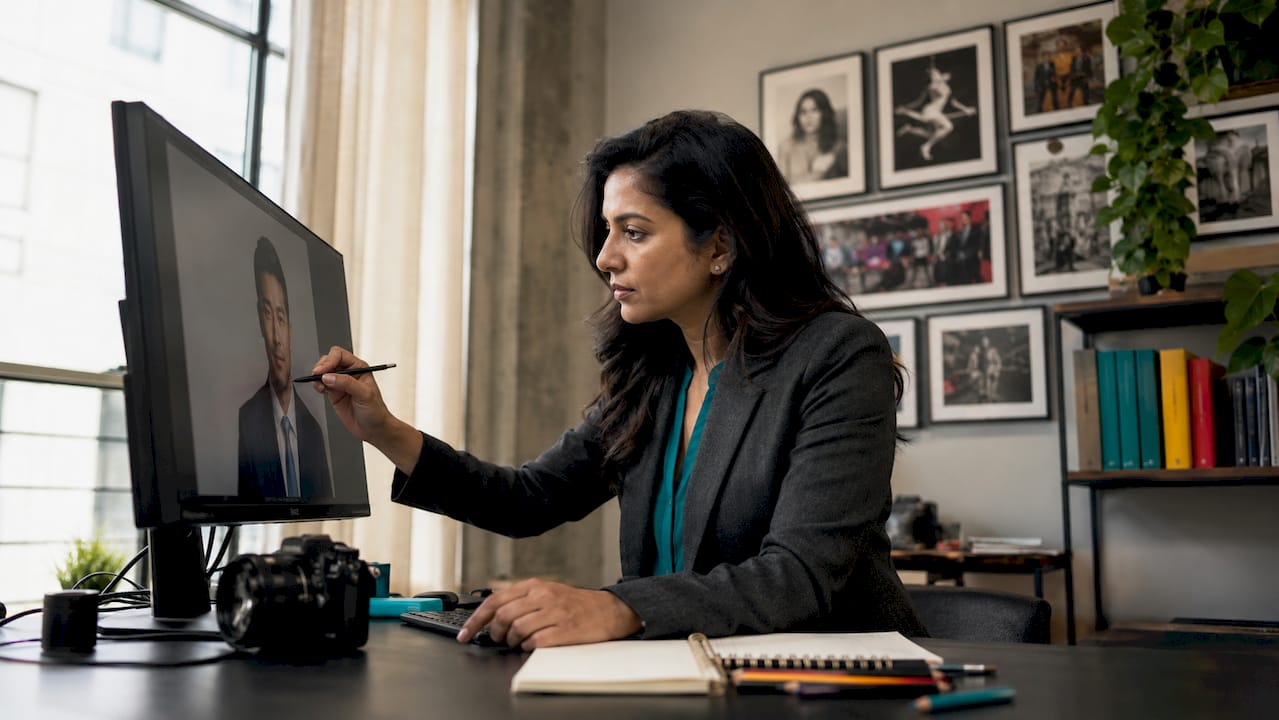
Person in a blazer works at a desk, pointing at a large monitor in a bright home office.

Corporate headshot retouching is the process of editing a professional portrait to improve appearance without altering identity. Known in the industry as professional portrait retouching, it covers everything from removing a temporary blemish to evening out skin tone under studio lights. Tools like Adobe Photoshop and Lightroom are the standard, and ethical guidelines define exactly how far an editor should go. With pricing tiers ranging from basic to advanced, understanding what you are paying for protects your personal brand. This guide covers corporate headshot retouching explained in full, from accepted techniques to red flags, so you can make confident decisions about your professional image.

What does ethical corporate headshot retouching involve?

Ethical retouching produces a photo that looks like you on your best day. It does not produce a photo that looks like a different person. The best retouching is largely invisible to anyone viewing the image. That standard is the foundation of professional headshot retouching.

Accepted edits in professional retouching

Industry-standard retouching includes a defined set of corrections:

  • Blemish removal: Temporary pimples, redness, or minor skin irritation are removed. Permanent features like moles or birthmarks stay unless the client requests otherwise.
  • Stray hair cleanup: Flyaway hairs that distract from the face are removed. The overall hairstyle remains unchanged.
  • Skin tone evening: Uneven lighting or mild redness is corrected. The goal is consistency, not a new complexion.
  • Under-eye shadow reduction: Industry standards call for reducing under-eye shadows by roughly 30–50%, not eliminating them entirely.
  • Teeth and eye brightening: Subtle brightening that looks natural in print and on screen. Overwhitening reads as artificial immediately.

What crosses the ethical line

Altering facial structure or removing permanent skin texture is unethical and creates a trust gap in client-facing roles. Removing all wrinkles, reshaping a jawline, or applying heavy skin smoothing that destroys pore detail are all out of bounds. The practical test is straightforward: if a colleague who knows you well would not recognize you from the photo, the retouching has gone too far.

Pro Tip: Print your retouched headshot and compare it to a recent candid photo. If the skin texture looks noticeably different between the two, ask your retoucher to dial back the smoothing.

What techniques and tools do professional retouchers use?

Person writing at a wooden desk beside a mug and potted plant in a sunlit workspace

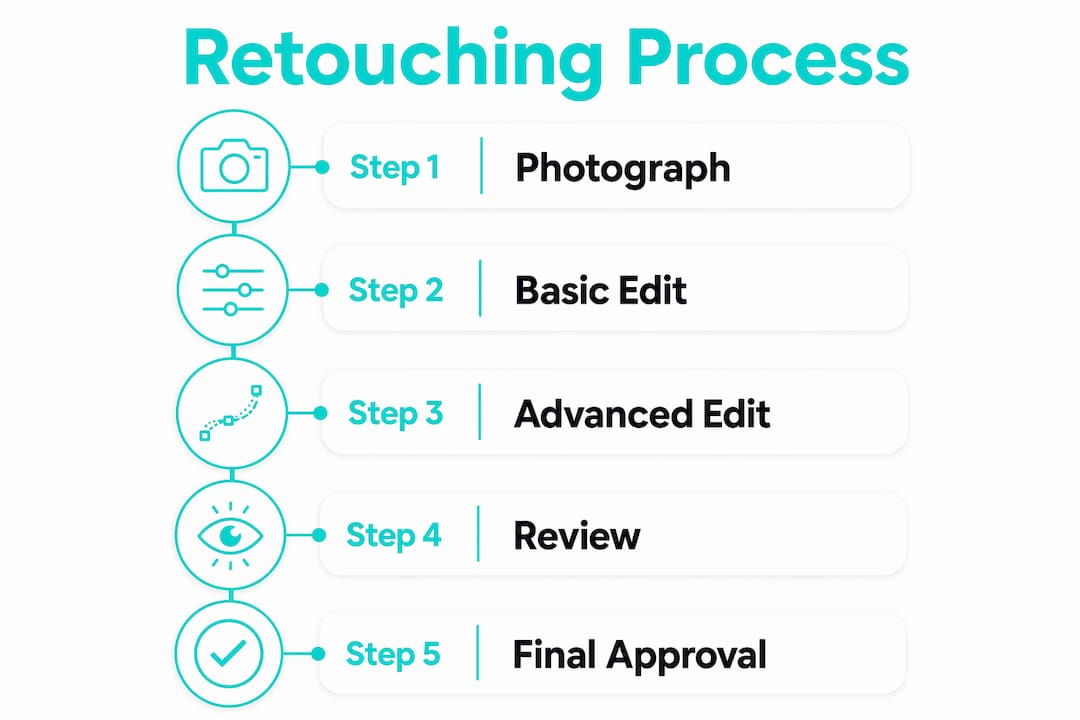
Professional retouchers follow a structured workflow. Each step builds on the last, and every edit is made non-destructively so the original image is never permanently changed.

The standard retouching workflow

  1. Global color balance: Correct white balance and exposure across the full image first. This sets a neutral foundation before any skin work begins.
  2. Blemish removal: Use the healing brush or clone stamp in Adobe Photoshop on a separate layer. Working on a separate layer means any mistake can be deleted without affecting the original.
  3. Frequency Separation: This technique separates the color and texture layers of the skin. The color layer is smoothed to even tone, while the texture layer stays at full opacity to preserve pores and fine lines. It is the most reliable method for natural-looking skin work.
  4. Dodge and burn: A good retoucher uses soft brushes at around 30% hardness and 10% flow on a separate 50% gray layer. This method softens wrinkles without erasing them, preserving the character lines that make a face recognizable.
  5. Final review at 100% zoom: Zooming to 100% to inspect pores confirms that skin texture is intact before the file is exported.

Software used in professional retouching

Adobe Photoshop remains the primary tool for detailed skin work because of its layer-based editing and precise brush controls. Adobe Lightroom handles global color correction and exposure adjustments efficiently. AI-assisted retouching tools are increasingly common, but AI tools vary in quality. The better ones balance smoothing with realistic texture preservation. The weaker ones apply uniform skin blurring that removes all micro-contrast and makes skin look plastic. A skilled retoucher uses AI tools selectively, not as a one-click solution.

Retouching process infographic with five steps: Photograph, Basic Edit, Advanced Edit, Review, and Final Approval.

Pro Tip: Always ask your retoucher to preserve skin texture and permanent features. Request a before-and-after comparison at 100% zoom to confirm pore detail is still visible in the final file.

What does corporate headshot retouching cost in 2026?

Professional headshot retouching pricing in 2026 falls into three clear tiers. Knowing what each tier includes helps you match your budget to your actual needs.

Tier Price range What is included Best for
Basic $15–$30 Blemish removal, minor color correction LinkedIn profiles, internal directories
Standard $25–$50 All basic edits plus skin tone evening, stray hair cleanup, eye and teeth brightening Client-facing roles, speaker bios
Advanced $50–$100+ Full workflow including Frequency Separation, dodge and burn, background cleanup Executive portraits, press kits, media use

Turnaround time for quality ethical retouching requires a few business days. Faster delivery often means automated processing, which increases the risk of over-smoothing. Three factors drive price above the base rate: image complexity, the volume of photos being retouched, and the retoucher’s level of experience. A retoucher with a strong portfolio of executive headshots will charge more than a generalist, and the difference shows in the final result.

For professionals in client-facing roles, the standard tier is the right starting point. Advanced retouching is worth the investment when the photo will appear in press coverage, a company website, or a speaker profile. You can review corporate photography cost benchmarks to understand how retouching fits into the overall session budget.

How do you choose the right retoucher for your headshot?

Choosing a retoucher comes down to portfolio review and clear communication. Both steps are non-negotiable before you commit to a service.

What to look for in a portfolio

  • Natural skin texture: Zoom into the skin in portfolio samples. Visible pores and fine lines are a good sign. Plastic, blurred skin is a red flag.
  • Consistent color: Skin tones should look even without appearing artificially altered. Watch for orange or gray color casts that signal poor correction.
  • Recognizable subjects: The person in the retouched photo should clearly match any unretouched reference images available. If the retoucher has before-and-after samples, compare them carefully.
  • Background consistency: Clean, even backgrounds without visible halos around the hair indicate careful, detail-oriented work.

Red flags to avoid

Overly airbrushed skin, unnaturally bright eyes, and reshaped facial features are all signs that a retoucher prioritizes dramatic transformation over authenticity. Over-retouching causes an immediate trust gap in client-facing roles when the photo no longer resembles the actual person. That gap damages credibility at exactly the moment a headshot is supposed to build it.

How to communicate your preferences

Send your retoucher reference images of headshots you admire. Describe specific concerns, such as a temporary skin condition or uneven lighting from the shoot. State clearly which features you consider permanent and do not want altered. Understanding retouching guidelines for headshots before your first conversation with a retoucher makes that conversation far more productive.

Pro Tip: Request a sample edit on one image before approving a full batch. A reputable retoucher will offer this without hesitation. It protects both parties and sets clear expectations before the full project begins.

For additional guidance on preparing for your session, a headshot photography brief helps you communicate your goals to both the photographer and the retoucher from the start. Career development resources like Cornerstone’s resume and interview tips also reinforce how much professional presentation, including your headshot, affects first impressions.

Key Takeaways

Ethical corporate headshot retouching enhances your professional image by removing temporary imperfections while preserving natural skin texture, character lines, and the recognizable features that build trust in client-facing roles.

Point Details
Ethical boundaries matter Remove blemishes and even skin tone, but never alter facial structure or erase permanent texture.
Frequency Separation is the gold standard This technique corrects color without destroying skin pores, producing natural-looking results.
Pricing reflects quality Standard retouching ($25–$50) covers most professional needs; advanced work ($50–$100+) suits press and executive use.
Portfolio review is non-negotiable Check for visible skin texture and recognizable subjects before hiring any retoucher.
Request a sample edit first One test image before a full batch confirms the retoucher understands your expectations.

Why subtlety is the only standard worth holding

I have seen professionals walk into a client meeting and watch the other person glance at their business card photo, then back at them, with a visible moment of confusion. That confusion is the direct result of over-retouching. It does not just feel awkward. It signals that the person is not fully comfortable presenting themselves as they are, which is the opposite of the confidence a strong headshot is supposed to project.

The misconception I hear most often is that more retouching equals a better photo. The reality is the opposite. Retouching closes the gap between a good photo and a great one without changing who you are. The goal is a photo that makes you look like yourself after a good night’s sleep, not a photo that makes you look like a stock image model.

Permanent features, including laugh lines, strong brows, and distinctive facial structure, are what make a face memorable. Removing them does not make you look younger. It makes you look generic. The professionals whose headshots I find most effective are the ones who trusted the process enough to leave their character intact. That is the standard worth holding.

— Justin

Get a professional headshot that works as hard as you do

At JFPhotos, we approach every corporate portrait session with the same commitment: deliver a photo that represents you accurately and professionally. Our editing process follows industry-standard retouching guidelines, preserving skin texture and natural features while removing the distractions that pull attention away from your face.

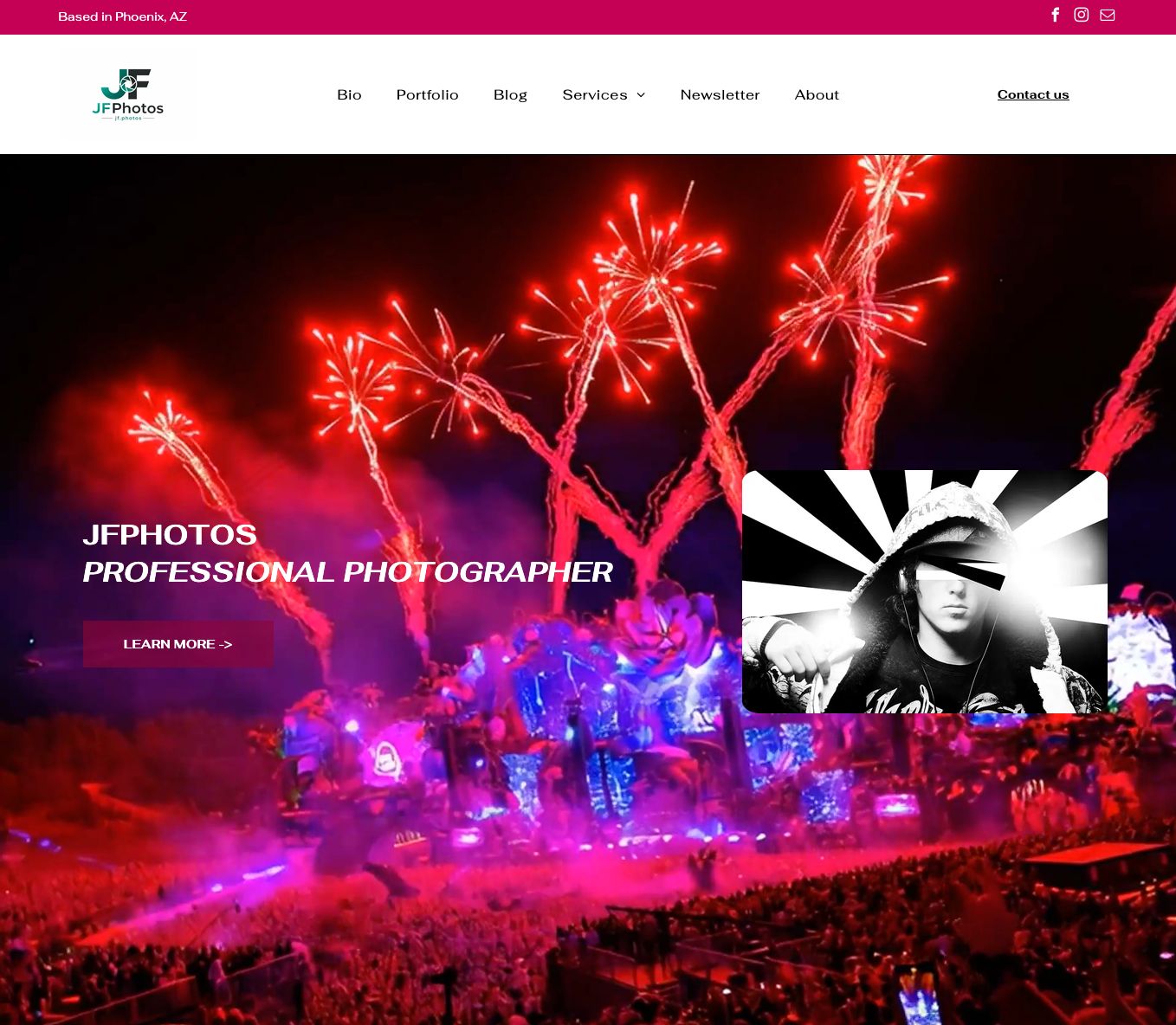
Website homepage with red fireworks over a concert crowd and a black-and-white photographer portrait overlay

We serve professionals and businesses across Phoenix, AZ, with quick turnaround times and editing that meets the standard your brand deserves. Whether you need a single executive portrait or headshots for an entire team, our Phoenix portrait photography services are built around your goals. Ready to get started? Visit JFPhotos to book your session or ask about our corporate photography packages.

FAQ

What is corporate headshot retouching?

Corporate headshot retouching is the process of editing a professional portrait to remove temporary imperfections and even skin tone while preserving natural features and skin texture. The goal is a polished image that still looks exactly like the subject.

How much does professional headshot retouching cost?

Pricing in 2026 ranges from $15–$30 for basic edits to $50–$100 or more for advanced retouching that includes Frequency Separation and dodge and burn techniques. Standard retouching at $25–$50 covers most professional needs.

What edits are considered unethical in headshot retouching?

Altering facial structure, removing all wrinkles, applying heavy skin smoothing that destroys pore detail, and reshaping features are all considered unethical. These edits create a trust gap when the photo no longer resembles the actual person.

How do I know if my headshot has been over-retouched?

If colleagues who know you well would not recognize you from the photo, the retouching is excessive. Zoom into the skin at 100% in the final file. If pores and fine lines are no longer visible, the smoothing has gone too far.

How long does professional headshot retouching take?

Quality ethical retouching requires a few business days. Faster turnaround often relies on automated processing, which increases the risk of over-smoothing and unnatural results.

Recommended

Recent Posts

Person adjusting a camera on a tripod beside a table in a colorful brick alleyway.
By Justin Frazier July 7, 2026
Choosing a Photographer for Your Wedding: Essential Tips and Wedding Photographer Checklist By Justin Frazier , JFPhotos Selecting the right photographer for your wedding is crucial, as they will capture your most cherished moments. This guide provides essential tips for identifying a photographer whose style aligns with your vision and ensures that your special day is well-documented. By following the advice presented here, you'll have the tools you need to make an informed decision while avoiding common pitfalls. Understanding the different aspects of wedding photography can save you time and help you focus on enjoying the planning process. We will cover various photography styles and important questions to ask potential photographers and discuss how to assess their portfolios thoroughly. What Are the Best Wedding Photography Styles to Consider? Wedding photography encompasses a variety of styles, each with its own unique features that cater to different preferences and aesthetics. Understanding these styles is essential when determining which one best matches the couple's vision for their special day. The main styles include documentary, portrait, and destination wedding photography, among others. Each offers distinct methods of capturing moments and telling the story of the day. How Do Different Wedding Photography Styles Compare? Documentary wedding photography focuses on capturing candid moments as they happen, creating a storytelling approach that reflects the genuine emotions of the day. In contrast, portrait wedding photography emphasizes staged shots, often featuring the couple and their families in beautifully arranged poses. Destination wedding photography incorporates the surroundings into the shot, showcasing both the couple and the unique features of the location. By comparing these styles, couples can select a photography method that aligns with their expectations and preferences. Which Photography Style Matches Your Wedding Vision? Choosing a photography style requires careful consideration of personal tastes and the overall wedding theme. Couples should think about the atmosphere they wish to convey through their images. For example, if the ceremony is laid-back and informal, a documentary style might be the best choice to capture natural interactions. Conversely, a more traditional celebration might benefit from classic portrait photography to showcase key moments. Matching the style with the wedding vision will ensure that the resulting photographs resonate with the couple's personality and taste. Which Important Questions Should You Ask Wedding Photographers? When meeting with potential wedding photographers, asking critical questions can help clarify expectations and make the right choice. Many couples often overlook essential inquiries, which can lead to misunderstandings later. Asking about experience, pricing, and contractual terms can significantly impact the overall satisfaction with the photographer's services. What Experience and Credentials Should You Verify? One of the first considerations should be the photographer's experience with weddings. It's essential to inquire about their background, including how long they have been in business, the number of weddings they have covered, and any available references. Check for professional credentials, such as membership in photography associations, which can demonstrate a commitment to maintaining high standards. Verifying experience helps ensure that the photographer is equipped to handle the dynamics of a wedding day seamlessly. How to Assess Photographer's Pricing and Package Details? Understanding the pricing structure is crucial for budgeting effectively. Photographers should offer transparent package details outlining what is included in their services. Pricing can vary widely, so inquire about different package options and what each entails. Consider factors such as hours of coverage, number of edited images, and any additional services like an engagement shoot or prints, which can be impactful. Finding good value for your investment will ultimately enhance your overall satisfaction. How Can You Evaluate a Wedding Photographer’s Portfolio Effectively? Reviewing a photographer's portfolio is essential to gauge their style and quality of work. A portfolio provides insight into how a photographer captures moments and whether their aesthetic aligns with your vision for your wedding day. An effective evaluation requires a keen eye for detail and an understanding of the characteristics that make strong wedding photography. What Should You Look for in Sample Wedding Photos? When examining sample wedding photos, pay attention to the technical quality, composition, and emotional resonance. Assess whether the images appear well-lit and properly composed, as these elements contribute to the overall impact. Additionally, consider the diversity of styles within the portfolio, which may reflect the photographer's versatility in capturing different moments throughout your wedding day. Strong storytelling elements, such as genuine reactions and emotional connections, are key indicators of a great wedding photographer. How Does Portfolio Metadata Reveal Photographer Expertise? Portfolio metadata—such as camera settings, shooting conditions, and editing techniques—can provide valuable insight into a photographer's expertise. Understanding the equipment they use and how they adapt to various lighting situations, for example, can validate their skill and knowledge. Discussing the techniques they employed in the showcased images may also reveal their thought process and creative approach to capturing weddings. What Are Essential Wedding Photography Packages and Pricing Factors? When planning your wedding photography, it is essential to understand the various packages available and the factors that influence pricing. Many photographers offer different levels of service to suit various budgets and preferences, which can ultimately affect the overall cost. How Much Does Wedding Photography Typically Cost in 2023? As we look at 2023, wedding photography costs can vary based on location, experience, and specific services provided. On average, couples might expect to pay anywhere from $1,200 to $3,500 for a standard package. High-end photographers with extensive experience and a unique style may charge significantly more, sometimes reaching up to $10,000 or more for comprehensive coverage. It's important to consider what fits within your budget while ensuring quality service. What Inclusions Should Wedding Photography Packages Have? Typically, wedding photography packages may include various services such as an initial consultation, a pre-wedding engagement shoot, and full-day coverage of the wedding itself. Deliverables often encompass a certain number of edited images in digital format, an online gallery for ease of access, and sometimes physical prints or albums. Customizing packages to fit needs can enhance value, so discussing specific requirements with the photographer is essential. Why Are Wedding Photography Contracts Important and What Should They Include? Photography contracts document the agreement between the photographer and the couple, providing legal protections for both parties. Understanding the importance of having a proper contract in place can help ensure all details are agreed upon and begin the services smoothly. What Key Clauses Should You Expect in a Photography Contract? A well-drafted contract should include essential clauses outlining the specifics of the services provided, pricing structures, and payment terms. These might cover details on deposits required, cancellation policies, and how many hours of coverage will be included. Furthermore, an agreement should detail who owns the copyrights to the images and any usage rights associated with them. Clear contracts prevent misunderstandings and provide peace of mind. How Can You Negotiate Contract Terms and Cancellation Policies? Negotiation is often a part of securing the best deal for wedding photography services. Couples should not hesitate to ask for clarity on cancellation policies in case wedding plans change unexpectedly. Understanding what terms might be negotiable, such as payment schedules or additional services, can also lead to a more favorable agreement for both parties. By being informed and assertive, couples can safeguard their investment. How Do You Find and Book the Right Wedding Photographer? Finding the ideal wedding photographer can seem overwhelming given the number of options available. However, with the right approach, couples can identify a photographer who aligns well with their overall vision. What Are the Best Ways to Search for Wedding Photographers? Utilizing a combination of online research, personal referrals, and reviewing local wedding expos can yield a solid list of potential photographers. Online platforms like wedding forums, social media, and photography directories provide immense insights and inspiration. Gathering recommendations from friends or family members can also lead to finding reputable professionals. Focusing on a diverse range of sources ensures a well-rounded search process to discover the best fit. When Is the Ideal Time to Book Your Wedding Photographer? Planning is crucial when it comes to securing your wedding photographer. Couples should ideally begin their search 9 to 12 months before the wedding date, allowing ample time to explore options and negotiate terms. However, it's also essential to consider the peak wedding season in your area, as popular photographers may book up quickly during this time. Early booking not only secures your preferred choice but may also set you up for better deals with flexible negotiating space.
Friends chatting and laughing outdoors around a picnic table with bowls of fruit and snacks
By Justin Frazier July 7, 2026
Discover what is a lifestyle family portrait session. Capture genuine family moments in a natural setting for lasting memories.
Person adjusting a camera beside printed photos on a sunlit patio with potted plants and a yellow cushion.
By Justin Frazier July 6, 2026
Discover what a corporate photography package is and how it boosts your brand. Get insights on pricing, services, and planning for success.
Bride and groom seated outdoors, smiling at each other in a warm garden setting
By Justin Frazier July 5, 2026
Discover what intimate wedding photography is and how it captures genuine emotions in small ceremonies. Get inspired for your special day!
Bride and groom in blue suit and white dress exit a church as guests applaud.
By Justin Frazier July 4, 2026
Compare the best wedding photographers in Phoenix, AZ — styles, pricing, and what sets each apart, plus why JFPhotos is a standout alternative for your day.
Woman adjusting a camera on a tripod beside a brick wall in a narrow city street
By Justin Frazier July 4, 2026
Discover why hiring a local Phoenix photographer matters for authentic, high-quality images. Enjoy personal service, eliminate travel surcharges, and...
Person sitting on the floor at a busy conference, taking notes with a camera bag beside them.
By Justin Frazier July 4, 2026
Discover the role of photographer in event marketing to boost your brand. Learn how skilled photographers transform events into valuable marketing assets.
Woman in a green suit applying lipstick while sitting in a garden patio with flowers and plants.
By Justin Frazier July 2, 2026
Learn how to prepare for your corporate headshot session and ensure you look professional and confident. Follow our essential checklist!
Dark photo of a person writing at a desk with headline text: “Top 3 Yelp.com Alternatives for Photography Providers 2026”
By Justin Frazier July 1, 2026
Discover the top 3 yelp.com alternatives for photography providers. Compare options to help you choose the best local photography services.
Family playing on a sunny lawn with a man, woman, and two children near blooming flowers
By Justin Frazier June 29, 2026
Discover what is a neighborhood lifestyle photography and how it captures authentic moments. Learn its value in connecting families to their community.
Show More