

The Role of Photographer in Event Marketing
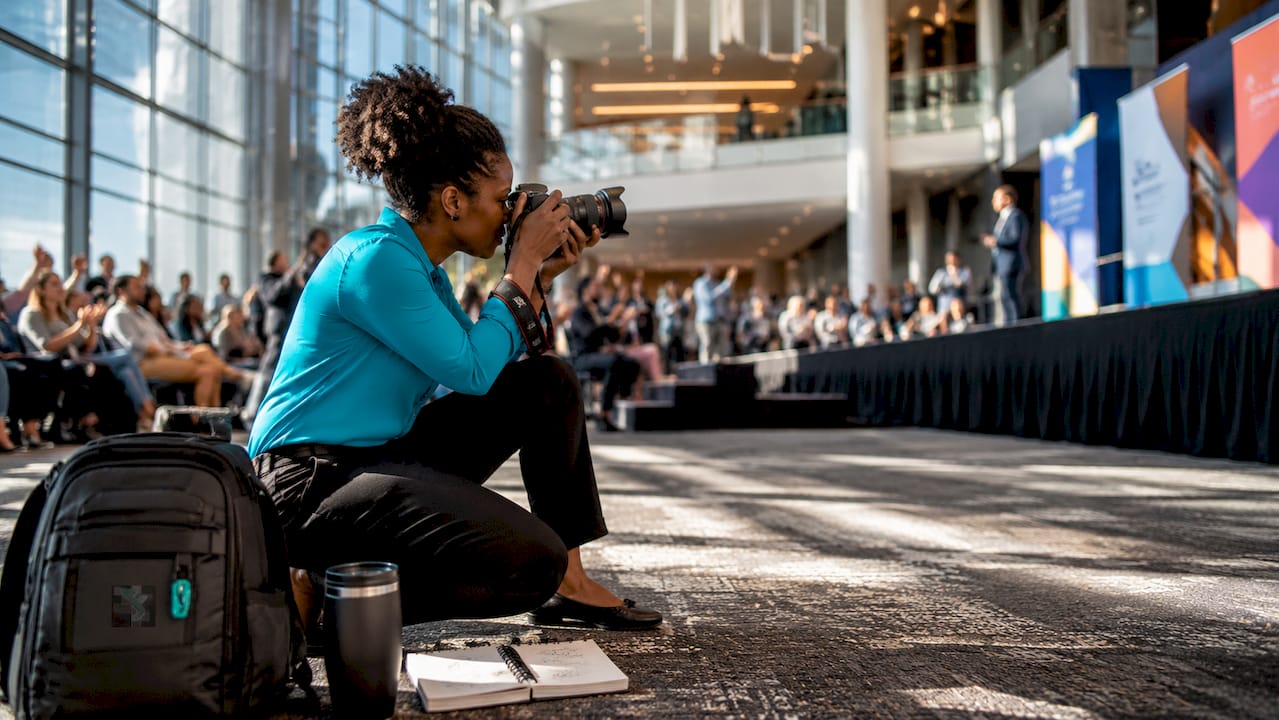
Event photography is defined as the strategic capture of branded moments, authentic attendee reactions, and key program highlights that function as reusable marketing assets long after the event ends. The role of photographer in event marketing extends well beyond documentation. A skilled photographer creates a visual library that feeds social media, email campaigns, press releases, and sponsor follow-ups. When you treat your photographer as a marketing partner rather than a vendor, the return on that investment multiplies across every channel you use to promote your brand. JFPhotos has seen this firsthand across hundreds of corporate and private events in Phoenix, AZ.
What are the core responsibilities of an event photographer in marketing contexts?
Event photographers create reusable visual libraries built around real attendee moments and the full content lifecycle your marketing team needs. That means planning every shot with post-event use in mind, not just capturing what looks good in the room. The difference between a photo archive and a marketing asset library comes down to intent.
The core deliverables a marketing-focused photographer must produce include:
- Candid audience reactions that generate social proof and show genuine engagement
- Speaker and keynote portraits suitable for press releases, speaker profiles, and LinkedIn posts
- Sponsor activation shots that include visible logos and branded environments
- Branded detail shots of signage, stage design, and product displays
- Crowd and venue overview images that communicate event scale for future promotion
A structured shot list with minimum image counts ensures coverage aligns with specific marketing goals rather than leaving gaps. Each category above maps directly to a marketing channel. Sponsor shots go into sponsor recap decks. Audience reactions go into social ads. Speaker portraits go into post-event email sequences. When your photographer understands those downstream uses, every frame has a purpose.
The importance of event photography also shows up in future event promotion. Images from this year’s conference become the proof of concept that sells next year’s tickets. Authentic, candid imagery outperforms stock photography in every engagement metric because audiences recognize real people in real moments.

How does detailed briefing and communication enhance the photographer’s role in event marketing?
Communication is the single factor that separates a passive documentarian from an active marketing collaborator. Effective communication transforms photographers from passive recorders into partners who shape coverage around your event flow and PR priorities. Without a clear brief, even a talented photographer will miss the shots that matter most to your marketing team.
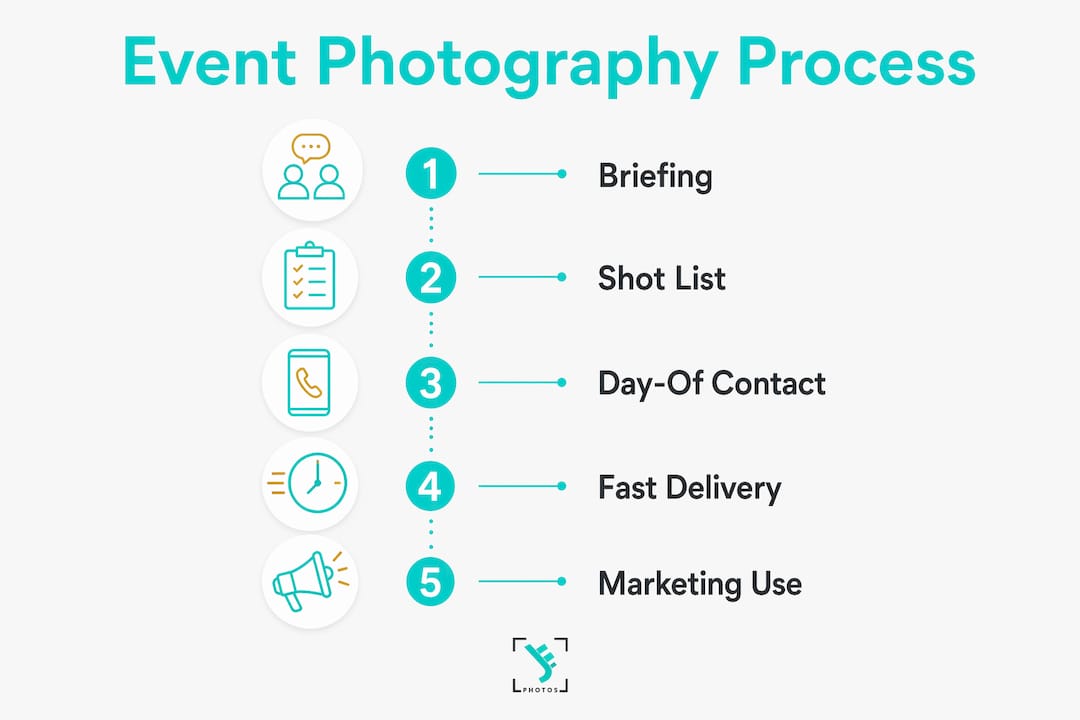
A written brief sent at least 72 hours before the event is the largest factor in photography success. That brief should cover:
- Full event schedule with times, locations, and transitions between sessions
- Priority shot list organized by marketing importance, not chronological order
- Must-capture moments such as award presentations, keynote openings, and sponsor activations
- Delivery expectations including same-day selects, full gallery timeline, and file format requirements
- Day-of contact name with direct phone access for real-time adjustments
- Usage rights specifying which channels and campaigns the images will appear in
A single empowered day-of contact on your team is non-negotiable. Events change. Speakers run late. Sponsors move their activation booth. Your photographer needs one person who can make fast decisions and reprioritize coverage without interrupting the event itself.
Pro Tip: Send your brief as a shared document the photographer can annotate. Ask them to confirm which shots they consider high-risk due to lighting, timing, or access. That conversation before the event prevents gaps on the day.
Briefing should provide strategic priorities rather than rigid frame-by-frame instructions. Micromanaging creative execution reduces the photographer’s ability to capture the spontaneous moments that make event imagery compelling. Give them the “what” and “why,” then trust their professional judgment on the “how.”
What marketing benefits arise from effective use and delivery of event photography?
Professional event photography generates social proof through authentic, candid imagery that extends your event’s reach well beyond the room. Social proof is the mechanism by which real attendee images build brand credibility faster than any produced marketing content. When prospects see genuine faces enjoying your event, they trust the brand behind it.
The delivery timeline is where most marketing teams leave value on the table. Guests who receive personalized photos quickly are 4–6x more likely to share on social media than those who receive only a generic gallery link days later. That sharing behavior is free amplification. It puts your brand in front of the attendee’s entire network without additional ad spend.
The marketing benefits of well-executed event photography include:
- Social media content ready to post within 24–48 hours of the event
- Email campaign assets that increase open and click rates with authentic imagery
- Landing page visuals that convert better than stock photography
- Sponsor recap packages that fulfill contractual obligations and strengthen renewal conversations
- Press and media submissions that increase pickup rates with high-resolution editorial images
Same-day photo delivery requires prior planning and agreement with your photographer. You cannot request same-day selects on the morning of the event and expect quality results. Build that requirement into your brief and confirm the workflow before the event date.
For a deeper look at how delivery workflows affect engagement, the event photography image delivery guide covers the full process from capture to distribution.
How to apply strategic event photography planning to maximize marketing ROI?
Treat your shot list as a marketing KPI map, not a comprehensive coverage checklist. Shot lists function best when structured around priority marketing assets such as keynote moments, audience reactions, and sponsor walls. An exhaustive list of 200 shots creates pressure that degrades quality. A focused list of 40 priority shots with clear marketing purposes produces a stronger asset library.
The table below shows how to align shot categories with marketing channels and delivery priorities:
| Shot category | Primary marketing channel | Delivery priority |
|---|---|---|
| Keynote speaker portraits | Press, email, LinkedIn | Same-day selects |
| Audience reaction shots | Social media, paid ads | Same-day selects |
| Sponsor activation with logos | Sponsor recap, renewal decks | 24-hour turnaround |
| Branded signage and details | Website, landing pages | Full gallery |
| Venue and crowd overviews | Future event promotion | Full gallery |
Delivery format matters as much as delivery speed. Specify whether you need vertical crops for Instagram Stories, horizontal crops for email headers, or high-resolution files for print. A photographer who receives those specifications in advance can flag and export the right versions without a second round of editing.
Pro Tip: Build a “minimum viable gallery” into your brief. Define the 10–15 images that must exist for your post-event marketing to function. Everything beyond that is a bonus. This protects your core marketing needs even if the event runs off schedule.
Rights management is part of planning, not an afterthought. Legal usage rights and image delivery contracts must cover all intended marketing uses before the event. Discovering post-event that your license does not cover paid advertising creates delays and renegotiation costs. Specify every intended use in the contract: organic social, paid ads, email, print, and third-party sponsor use.
For planners who want a structured starting point, the corporate event photo checklist covers every planning step from brief creation to final delivery.
What are common challenges and best practices in the photographer-marketing team collaboration?
Last-minute event changes are the most common source of missed marketing shots. A speaker cancels. A sponsor moves their booth. The awards ceremony runs 30 minutes late. Without a single empowered contact who can communicate those changes to the photographer in real time, critical moments get missed.
Best practices for managing the photographer-marketing team relationship include:
- Assign one contact with decision-making authority for the full event day
- Share the run-of-show document with the photographer at least 48 hours before the event
- Agree on a check-in schedule so the photographer can flag access or lighting issues early
- Confirm delivery workflow including file transfer method, folder structure, and naming conventions
- Review usage rights in the contract before signing, covering every channel you plan to use
Photo delivery workflows that minimize friction produce measurably higher sharing rates. Every extra step between the photo and the guest’s social post reduces the likelihood of sharing. Use direct download links, not password-protected portals with multiple login steps.
Rights, copyright, and releases must be clear before any image appears in a commercial context. If your event includes attendees whose faces appear in marketing materials, you need signed releases or a clearly communicated consent policy at registration. This is standard practice, not an edge case.
For guidance on aligning photo coverage with your marketing goals from the start, working with an experienced photographer who asks the right questions during the briefing process makes the entire workflow faster and more reliable.
Key takeaways
The role of photographer in event marketing is to produce a planned, channel-specific visual library that drives audience engagement, builds brand credibility, and extends the event’s reach across social media, email, press, and sponsor communications.
| Point | Details |
|---|---|
| Brief early and in writing | Send a written brief at least 72 hours before the event covering shot lists, delivery terms, and contacts. |
| Treat the shot list as a KPI map | Prioritize 10–15 must-have marketing assets rather than building an exhaustive coverage checklist. |
| Plan delivery before the event | Agree on same-day selects, full gallery timelines, and file formats in advance to protect marketing deadlines. |
| Assign one day-of contact | A single empowered contact allows real-time reprioritization when event dynamics change unexpectedly. |
| Secure rights before publishing | Confirm that your contract covers every intended marketing channel, including paid ads and sponsor use. |
Why I think most marketing teams underuse their event photographer
Most marketing teams I work with treat the photographer as the last item on the vendor list. They book the venue, the catering, and the AV team months in advance. The photographer gets a call two weeks out and a vague instruction to “get good shots.” That approach produces a generic archive instead of a marketing asset library.
The shift I have seen produce the best results is treating the photographer as a content strategist who happens to use a camera. When you bring them into the planning process early, share your campaign goals, and explain which channels need which types of images, the coverage changes completely. The photographer starts thinking about your Instagram grid, your email header, and your sponsor deck while they are standing in the room.
The other thing most teams miss is the value of refining the brief across event cycles. Your first event brief will be imperfect. After the event, review what was captured versus what was missing. Update the brief for the next event. Within two or three cycles, you have a brief that functions as a repeatable content production system. That is when event photography stops feeling like an expense and starts feeling like a distribution channel.
I also believe the personalized delivery piece is the most underrated tactic in event marketing. Sending a guest their own photo within hours of the event, with a simple sharing link, generates organic reach that no paid campaign can replicate at the same cost. It is not complicated. It just requires planning the workflow before the event, not after.
— Justin
JFPhotos brings marketing-focused event coverage to Phoenix
Planning an event and need photography that actually serves your marketing goals? JFPhotos delivers professional event photography in Phoenix, AZ, with a process built around your marketing objectives from the first briefing call to final delivery.
JFPhotos works with marketing teams and event planners to build shot lists aligned with your campaign needs, agree on delivery timelines that fit your post-event schedule, and provide clear usage rights for every channel you plan to use. With over a decade of experience capturing corporate events, conferences, and brand activations across Arizona, JFPhotos produces visual libraries that work as hard as your marketing team does. Reach out to discuss your next event and get a tailored coverage plan before your event date.
FAQ
What is the role of a photographer in event marketing?
An event photographer creates a targeted visual library of branded moments, audience reactions, and key program highlights that marketing teams use across social media, email, press, and sponsor communications. Their role is to produce reusable marketing assets, not just a photo archive.
How does briefing improve event photography results?
A written brief sent at least 72 hours before the event, covering shot lists, delivery expectations, and a day-of contact, is the largest single factor in aligning photography with marketing goals. Without it, photographers default to general coverage rather than channel-specific asset creation.
How much does fast photo delivery affect social sharing?
Guests who receive personalized photos quickly are 4–6x more likely to share on social media than those who receive a generic gallery link days later. Planning same-day delivery in advance is the most direct way to increase post-event organic reach.
What should a marketing-focused shot list include?
A shot list should prioritize keynote speaker portraits, audience reaction shots, sponsor activations with visible logos, branded signage, and venue overview images. Structure it by marketing priority, not by chronological event order.
Who owns event photos and can use them for marketing?
Ownership and usage rights depend on the contract between the client and photographer. Legal usage rights must be specified before the event and should cover every intended channel, including paid advertising, email, print, and third-party sponsor use.
Recommended
Recent Posts